EU Launches ALADIN Project to Pioneer Circular Garment Manufacturing Across Europe
Four-year Horizon Europe initiative brings together 14 countries to develop regional microfactory network for on-demand, circular textile production
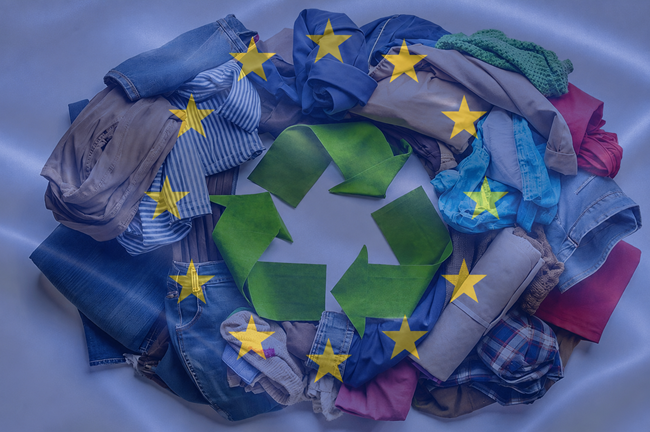
The European Union has launched the ALADIN project — a four-year Horizon Europe initiative coordinated by German research institutes to build a network of regional microfactories for circular garment production, with significant implications for Bangladesh's textile exporters.
ALADIN: A Circular Vision for European Apparel
The European Union has launched the ALADIN (Advanced LocAl and Digital Innovation Network for Circular Garments) project to accelerate circular textile production across Europe. The four-year initiative officially started in May 2026 under the EU's Horizon Europe research and innovation programme, with a consortium coordinated by German research institutes and including partners from Belgium, France, Italy, Romania, and Czechia.
Regional Microfactories for On-Demand Production
The ALADIN project aims to build a network of regional microfactories that can produce garments closer to consumers. The approach supports on-demand manufacturing, reduces overproduction waste, and shortens supply chains — directly addressing three of the apparel industry's most persistent environmental problems. For Bangladesh's export-oriented manufacturers, this signals a structural shift in how apparel may be sourced in the EU market over the coming decade.
Digital Platform for Value Chain Connectivity
A key component of the ALADIN project is the development of a digital platform that connects businesses across the textile value chain. The platform will integrate design tools, production planning, supply chain traceability, and end-of-life garment tracking — providing the data infrastructure that circular business models require. This digital layer aligns with the EU's broader Digital Product Passport (DPP) initiative, which will become mandatory for textiles sold in the EU.
Four Focus Areas
The project focuses on four main areas: digital services for small and medium-sized enterprises (SMEs), regional manufacturing collaboration, advanced circular design methodologies, and the development of standardised sustainability metrics. By demonstrating practical circular production models, ALADIN aims to provide a replicable blueprint that other European regions — and eventually other global production hubs — can adopt.
Three Demonstrator Products
To demonstrate the concept, the ALADIN consortium will develop three products: a semi-automated T-shirt, a smart parka, and a blazer with integrated digital traceability. Each demonstrator will showcase different aspects of circular design — from mono-material construction that enables easier recycling, to modular components that can be replaced independently, to embedded digital tags that provide full lifecycle data to consumers and recyclers.
Implications for Bangladesh
While ALADIN is a European-focused project, its implications for Bangladesh's textile exporters are significant. As the EU builds domestic circular production capacity, Bangladesh will need to: invest in digital traceability infrastructure that can integrate with EU platforms; develop circular design capabilities (mono-material garments, modular construction); position itself as a supplier of recycled and recyclable materials; and explore partnerships that allow Bangladeshi factories to participate in ALADIN-style microfactory networks. BGMEA and BKMEA have both flagged circular economy transition as a strategic priority.
This news was originally published by Textile Today. For the full original report, please visit: https://textiletoday.com.bd/eu-launches-aladin-project-to-advance-circular-textile-production
📬 Get Bangladesh Trade News in your inbox
Weekly digest of export industry news, policy updates, and market analysis.
📰 Related Stories