Debapriya Bhattacharya Sees More Anxiety Than Progress After BNP Government Six Months
Dhaka, August 24, 2026 — Economist Debapriya Bhattacharya has said he sees more "anxiety and concern" than progress after six months of the BNP government, which returned to power after 19 years following the February 2026 election. Assessing business and trade, power and energy, and various economic indicators, Debapriya said there was little reason for either excitement or optimism.
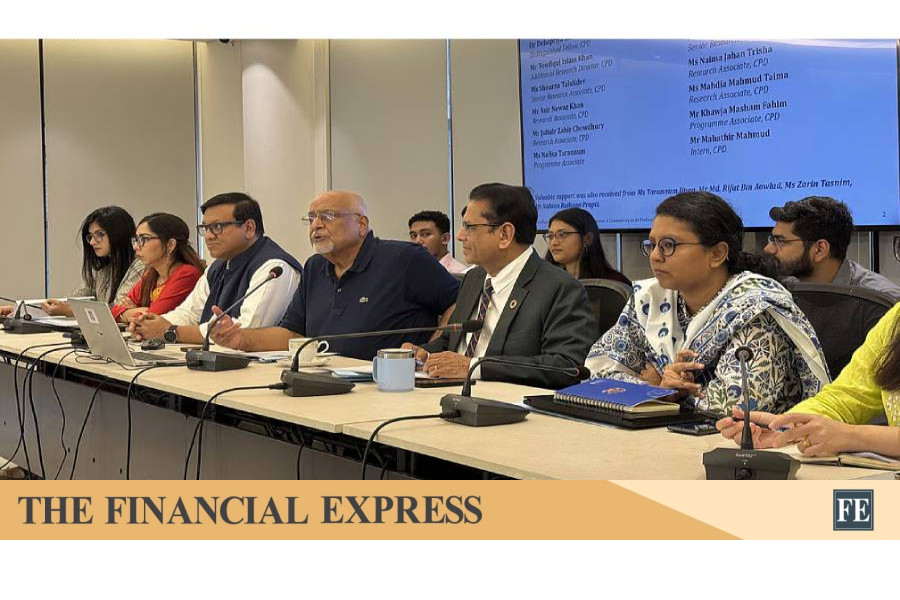
"We are not saying there has been no improvement or that there is no stability anywhere. But we are not seeing the degree of dynamism and progress that is needed," he said at a dialogue at the Centre for Policy Dialogue (CPD) office in Dhaka on 24 August 2026.
📊 31 Indicators: 19 Deteriorated, 12 Improved
Debapriya presented a review of 31 economic indicators for the government's first six months. Of these, 19 had deteriorated while only 12 had improved. Even the indicators showing improvement offered little cause for optimism, he said.
Higher foreign exchange reserves and capital machinery imports needed to be viewed in context. "Is the increase in our foreign exchange reserves a sign of health or a sign of anaemia?" he asked, arguing that weak investment meant lower imports, which, in turn, helped reserves rise. Although capital goods imports and letters of credit showed some improvement, foreign borrowing, prospects for future capital goods imports, and private-sector credit had all deteriorated significantly.
🏭 Manufacturing Sector: Alarming State
He described the manufacturing sector as being in an "alarming" state, noting that private-sector credit growth had fallen to an all-time low of 4.5 percent. "When you look at private-sector credit, capital goods imports, foreign investment and the industrial production index together, calling the manufacturing sector stagnant at this point would be an understatement," he said.
He said the energy crisis linked to wars in West Asia could be contributing to the situation, adding that 62,000 people had lost jobs in industrial areas of Savar, Ashulia, and Gazipur in the first seven months of 2026. This figure is slightly higher than the 61,881 job losses reported by CPD in its separate assessment, reflecting the continuing factory closures.
💰 Revenue Target: Like Asking a Child to Grow from 3 to 6 Feet
CPD estimates suggest the government would need 42 percent growth to achieve its revenue target of nearly Tk 700 billion in the ongoing fiscal year. The highest growth recorded in tax revenue was 17 percent in 2011. Debapriya likened the target to asking a child to grow from three feet to six feet in a year. He said the CPD estimates the revenue shortfall could reach nearly Tk 150 billion in fiscal 2026-27.
🤝 Two-and-a-Half-Storey Government
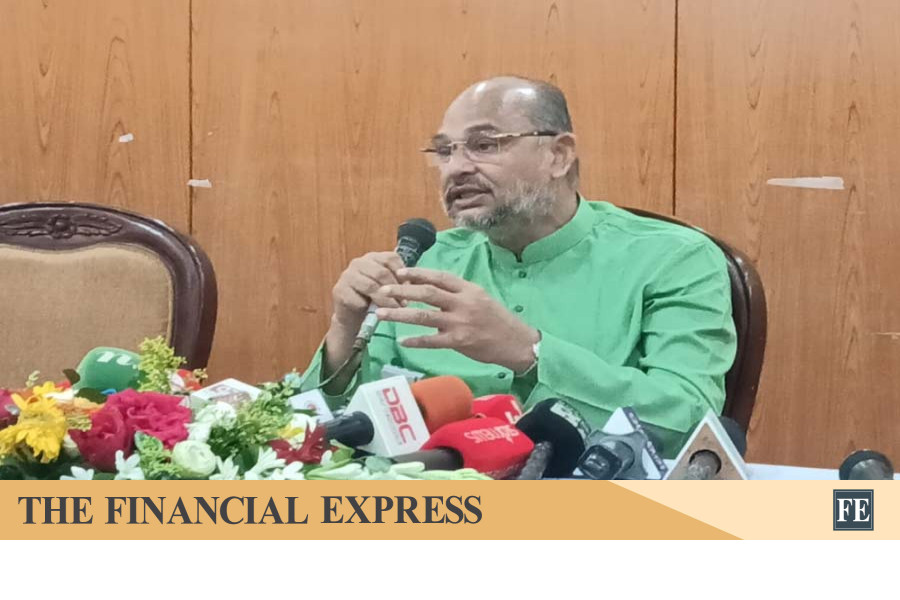
Describing the government, comprising ministers, state ministers, advisors to the prime minister, and special assistants of various ranks, as a "two-and-a-half-storey government", Debapriya said Prime Minister Tarique Rahman remained more popular than his government. He said the key challenge was whether the prime minister could use his personal popularity to show political courage, keep members of his party on the right track, and ensure bureaucrats remained in their proper place.
He gave the six-month-old government a "B" grade out of 100, saying: "I would like to give it an A, but it is being pulled towards a B." Under the commonly used SSC and HSC grading system, 70-79 percent is considered an A, while 50-59 percent falls within the B range.
🌐 Strategic Context for Bangladesh's Export Economy
For Bangladesh's export economy, Debapriya's assessment is particularly concerning. The manufacturing sector's "alarming" state, with zero industrial production growth and private credit at an all-time low, directly threatens the export economy's ability to maintain its current RMG-dominated production base — let alone diversify into new sectors. The 62,000 job losses in industrial areas represent a direct erosion of the skilled workforce that underpins export manufacturing.
The prime minister's popularity advantage over his government, as identified by Debapriya, provides a political window for the kind of bold structural reforms that the economic situation demands. The question is whether Prime Minister Tarique Rahman will use that political capital to push through the banking sector clean-up, energy sector reform, NBR bifurcation, and trade facilitation improvements that multiple assessments — from CPD, TBS, and The Daily Star — have identified as the binding constraints on Bangladesh's economic recovery. Without that political courage, the "anxiety and concern" that Debapriya describes will only deepen as Bangladesh approaches LDC graduation in November 2026 with a manufacturing sector in stagnation, a fiscal position under pressure, and an export economy that remains overly dependent on a single sector facing its own global headwinds.
This news was originally published by The Financial Express. For the full original report, please visit: https://thefinancialexpress.com.bd/economy/debapriya-bhattacharya-sees-more-anxiety-than-progress-after-six-months-of-bnp-government
Related on BangladeshExport
📬 Get Bangladesh Trade News in your inbox
Weekly digest of export industry news, policy updates, and market analysis.
📰 Related Stories