Bangladesh and India Discuss Lifting Yarn Import Curbs and Reopening Border Haats
Dhaka, August 24, 2026 — Bangladesh and India have discussed lifting Dhaka's restrictions on Indian yarn imports through land ports, alongside reopening closed border haats and bringing land ports into full operation, as the two neighbouring countries seek to strengthen bilateral trade. The issues came up at a meeting between Commerce Minister Khandakar Abdul Muktadir and Indian High Commissioner to Bangladesh Dinesh Trivedi at the Secretariat in Dhaka on 24 August 2026.
📊 Bilateral Trade Context
Bilateral trade between Bangladesh and India currently stands at around $13 billion, but trade activities had slowed somewhat over the past one and a half years because of several obstacles, Muktadir said. India is Bangladesh's second-largest trading partner after China, and the two countries have longstanding economic ties.
- 💰 Bilateral trade: ~$13 billion
- 🌐 India's rank: 2nd largest trading partner (after China)
- 🚧 Key issues: Yarn import restrictions, closed border haats, land port operations
- 🤝 Proposed: Joint task force, digital infrastructure for business cooperation
The meeting focused on making land ports fully operational, reopening closed border haats, and withdrawing the existing restriction on yarn imports through land ports. The two sides also discussed forming a joint task force and developing digital infrastructure to increase cooperation between businesses, create new investment opportunities, and accelerate trade.
🤝 Minister Muktadir's Position
Muktadir expressed hope that the Indian high commissioner's initiatives would further strengthen Bangladesh-India relations and take economic cooperation to a new level. Discussions were held on how to identify the problems that have slowed trade and make trade relations between the two countries easier and more effective in the future, according to a ministry statement.
🌐 High Commissioner Trivedi's Remarks
Trivedi said that while the two countries have some political and economic differences, ordinary people want development and progress. Both countries, he added, must work together for the future of the younger generation.
"Bangladesh and India are two independent and sovereign countries. Neither is bigger or smaller; everyone is equal. The two countries must continue to work on the basis of this equality," Trivedi said. He stressed that economic cooperation is the most important factor in improving bilateral relations, adding that stronger economic ties would lead to greater cooperation in other areas.
👕 RMG Sector and Mutual Interdependence
Trivedi also stressed the importance of joint investment and production, pointing to the global success of Bangladesh's ready-made garment (RMG) sector. He said India can support the sector by supplying zippers, machinery, buttons, and other inputs to increase mutual interdependence between the two countries. He said he feels proud to see garments bearing the "Made in Bangladesh" label in international markets, and the garment sector could expand further through joint initiatives between the two countries.
🌐 Multi-Source Context
The yarn import discussion was also reported by The Financial Express and Prothom Alo English, which noted that the issue of reopening border haats and lifting restrictions on yarn imports was discussed during Indian External Affairs Minister S. Jaishankar's recent visit to Dhaka. The FE reported that Dhaka and Delhi discussed reactivating land ports and easing yarn imports as part of broader efforts to normalise bilateral trade. Prothom Alo English reported that the discussions also covered the reopening of border haats that were closed during the previous administration.
🌐 Strategic Context for Bangladesh's Export Economy
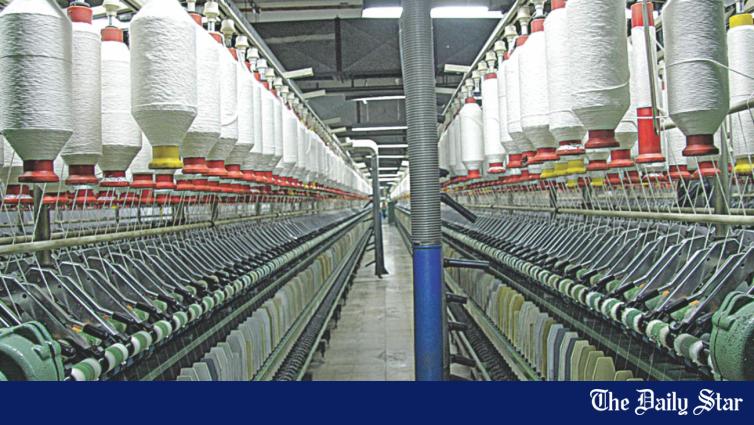
For Bangladesh's export economy, the potential lifting of yarn import restrictions through land ports is significant. The RMG sector's backward linkage industries — particularly textile mills that import raw cotton and yarn — have been affected by the restrictions on land port imports, which force them to use more expensive sea port routes. BTMA (Bangladesh Textile Mills Association) has been advocating for the resumption of yarn imports through land ports to reduce input costs and improve competitiveness.
The discussion also builds on the earlier B2B task force announcement between FBCCI and CII (18 August 2026), which identified infrastructure investment and emerging technologies as priority areas for bilateral cooperation. The yarn import issue represents the kind of practical trade facilitation measure that the B2B task forces were designed to address — removing specific barriers that have constrained trade flows between the two countries despite the broader political commitment to stronger economic ties.
If the restrictions are lifted, it would reduce logistics costs for textile manufacturers, shorten the supply chain for yarn imports, and demonstrate tangible progress in the broader Bangladesh-India economic engagement that the BNP government has been prioritising since taking office in February 2026. The reopening of border haats would also benefit small traders and local economies on both sides of the border, providing grassroots-level economic integration that complements the high-level B2B and government-to-government engagement. Together, these measures could help reduce the bilateral trade imbalance that has been a persistent concern for Bangladesh and create a more balanced and mutually beneficial commercial relationship between the two South Asian neighbours as Bangladesh approaches its LDC graduation in November 2026.
This news was originally published by The Daily Star. For the full original report, please visit: https://www.thedailystar.net/business/economy/news/bangladesh-india-discuss-lifting-yarn-import-curbs-4256046
Related on BangladeshExport
📬 Get Bangladesh Trade News in your inbox
Weekly digest of export industry news, policy updates, and market analysis.
📰 Related Stories