Bangladesh External Financing Cushion Thins: Foreign Loan Commitments Drop 37%
Opinion by SANEM Executive Director Selim Raihan: declining foreign loan commitments, rising debt servicing, and slowing remittance growth signal weakening external resilience
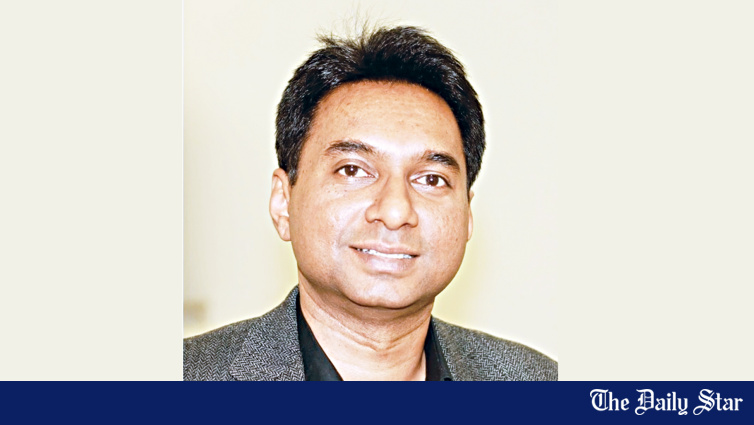
Dhaka, August 4, 2026 — Bangladesh's latest external sector numbers deserve closer scrutiny than the reassuring headline of rising remittances suggests, argues Selim Raihan, professor of economics at Dhaka University and executive director of the South Asian Network on Economic Modeling (SANEM). A closer reading reveals an economy gradually losing one of its traditional sources of resilience: steady inflows of concessional foreign financing.
While remittances continue to support foreign exchange earnings, declining foreign loan commitments and disbursements, alongside rising debt repayments, point to a tightening external financing environment that could constrain Bangladesh's development options in the years ahead.
📊 37 Percent Collapse in Foreign Loan Commitments
The most striking figure in Bangladesh's latest external sector data is the 37 percent collapse in foreign loan commitments, which fell from $8.32 billion in FY2024-25 to $5.24 billion in FY2025-26. Loan commitments represent future investment capacity — the pipeline of concessional financing that Bangladesh can draw on for infrastructure, energy, climate adaptation, and human development projects over the coming years.
Such a sharp decline raises difficult questions that policymakers cannot afford to ignore:
- ❓ Are development partners becoming more cautious about Bangladesh's macroeconomic trajectory?
- ❓ Are implementation bottlenecks delaying project approvals and discouraging new commitments?
- ❓ Is Bangladesh becoming less attractive as concessional financing declines with its transition toward middle-income status?
Whatever the reason, the outcome is the same: fewer committed resources for the infrastructure, energy, climate adaptation, and human development investments that Bangladesh needs to sustain growth and strengthen resilience ahead of LDC graduation.
💳 Loan Disbursements: Modest Decline, Real Concern
The decline in loan disbursements adds to the concern. Actual foreign financing fell to $8.07 billion in FY2025-26 from $8.57 billion a year earlier. Although the reduction appears modest in percentage terms, it reflects weakening external support at a time when Bangladesh needs substantial investment to sustain growth and strengthen resilience against overlapping macroeconomic and geopolitical shocks.
Development finance is valuable not only because it provides foreign exchange but also because it supports long-term investments that private capital often avoids — including rural infrastructure, climate adaptation, social sector programmes, and large-scale energy projects with extended payback periods. A decline in concessional financing therefore has consequences that extend well beyond the immediate fiscal year.
💰 Rising Debt Servicing Burden
More worrying than the disbursement decline is the rising burden of debt servicing. External loan repayments climbed to $4.49 billion in FY2025-26 from $4.09 billion a year earlier, reflecting the repayment phase of loans contracted over the past decade, particularly for large infrastructure and mega projects.
Many of these projects experienced delays, cost overruns, or failed to generate the expected economic returns on time. Bangladesh is therefore beginning to shoulder repayment obligations before fully realising the productivity gains these investments were meant to deliver — a classic emerging-market debt dynamic that can quickly become unsustainable if export earnings and foreign exchange reserves fail to keep pace.
The challenge is likely to intensify as grace periods expire on more foreign loans contracted during the infrastructure investment boom of the past decade. Without stronger export growth and higher foreign exchange earnings, debt servicing will consume a growing share of external resources, leaving less fiscal space for new development priorities such as climate adaptation, education, and healthcare.
👥 Remittances: Strong but Slipping
Supporters of the current outlook may point to remittances, which rose 15 percent year-on-year to $2.85 billion in July. Migrant workers remain one of the strongest buffers against external shocks, providing a steady stream of foreign exchange that has historically cushioned Bangladesh through periods of export weakness and capital flow volatility.
Yet July still fell short of the $3 billion monthly level consistently achieved between December 2025 and May 2026, reminding policymakers that remittance growth cannot be taken for granted or expected to offset every external imbalance. The dip below the $3 billion threshold is particularly concerning given that remittances have been propping up foreign exchange reserves even as export earnings have stagnated and capital inflows have weakened.
🚢 Imports Rising, Trade Pressure Mounting
Meanwhile, imports rose 6.26 percent during July-May of FY2025-26 to $64.02 billion on a free-on-board (FOB) basis. While the increase may reflect improving industrial activity and rising demand for raw materials and capital machinery, the continuing Middle East conflict has kept global fuel and commodity prices high and volatile.
For an import-dependent economy like Bangladesh, higher prices inflate the import bill even without significant volume growth, putting pressure on foreign exchange reserves, widening the trade deficit, and raising production costs across industrial sectors. The combination of rising imports and stagnant exports is a particularly uncomfortable one for a country that needs to rebuild reserves ahead of LDC graduation.
⚖️ The Bigger Picture: No Immediate Crisis, but Cushion Thinning
Taken together, these indicators show that Bangladesh is not facing an immediate balance-of-payments crisis, but its external financing cushion is visibly thinning. The arithmetic is straightforward: foreign loan commitments are falling, debt servicing is rising, imports are growing, and remittance growth — while still positive — is no longer hitting the peaks of earlier months. The cumulative effect is a gradual erosion of the external buffers that have historically protected Bangladesh from sudden macroeconomic shocks.
📋 What Needs to Happen Now
Professor Raihan identifies six priority actions to safeguard against mounting external vulnerabilities:
- 🤝 Restore development partner confidence through improved macroeconomic management and policy consistency
- 🔧 Improve project implementation to convert existing commitments into actual disbursements more efficiently
- 🌏 Strengthen export competitiveness through structural reforms, trade agreements, and diversification beyond RMG
- 💼 Diversify foreign investment sources beyond traditional development partners
- 👥 Sustain remittance growth by reducing friction in formal channels and engaging the diaspora more strategically
- 📈 Ensure future borrowing delivers timely, productive returns by improving project selection and execution
📋 Strategic Context
The external sector analysis takes on added significance given Bangladesh's approaching LDC graduation deadline in November 2026 and the government's request for a three-year deferral. Development partners considering that request will be looking closely at Bangladesh's external sector trajectory, and the combination of falling loan commitments, rising debt servicing, and slowing remittance growth is unlikely to inspire confidence.
The good news is that Bangladesh still has time to reverse these trends through credible policy action. The bad news is that the window for action is narrowing, and the consequences of inaction — in the form of reduced fiscal space, constrained development options, and increased vulnerability to external shocks — will compound quickly if the trends described in this analysis continue unchecked.
This news was originally published by The Daily Star. For the full original report, please visit: https://www.thedailystar.net/business/economy/news/bangladeshs-external-cushion-wearing-thin-4239341
📬 Get Bangladesh Trade News in your inbox
Weekly digest of export industry news, policy updates, and market analysis.
📰 Related Stories