Bangladesh Apparel Exports to EU Fall 16.4% to 8.64 Billion Euro in H1 2026
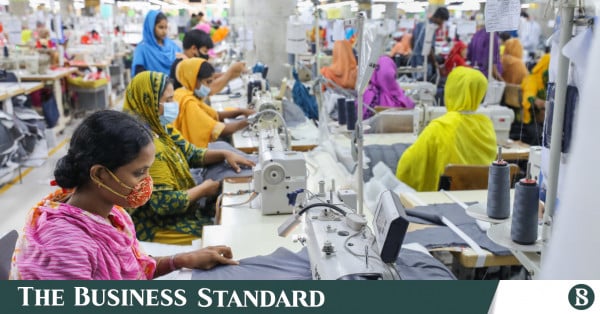
Dhaka, August 15, 2026 — Bangladesh's apparel exports to the European Union fell 16.43 percent year-on-year to €8.64 billion in the first half of 2026, amid a broader contraction in the bloc's apparel import market. The decline was driven by an 8.22 percent drop in shipment volumes and an 8.94 percent fall in average export prices during January-June, according to Eurostat data compiled by Bangladesh Apparel Voice (BAV) founder and CEO Mohiuddin Rubel.
📊 The H1 2026 Export Numbers
The H1 2026 figures paint a concerning picture for Bangladesh's RMG sector:
- 💰 €8.64 billion — Bangladesh apparel exports to EU in H1 2026
- 📉 -16.43% — year-on-year decline in export value
- 📉 -8.22% — drop in shipment volumes
- 📉 -8.94% — fall in average export prices
- 📈 June 2026 improvement — +0.87% to €1.37 billion, volume +6.53%
The June improvement — with shipment volumes increasing 6.53 percent — partly offset a 5.31 percent decline in average prices that month, offering a glimmer of hope that the worst may be behind Bangladesh's EU export performance.
🌐 EU Market Context: Overall Contraction
The decline was not unique to Bangladesh — the entire EU apparel import market contracted in H1 2026:
- 💰 €41.10 billion — total EU apparel imports (global)
- 📉 -9.70% — overall EU apparel import decline
- 📉 -6.40% — EU import volume decline
- 📉 -3.53% — average unit price decline
The decline reflected weaker consumer demand and lower prices across the bloc — driven by inflation pressure, economic uncertainty, and shifting consumer spending patterns in European markets.
📊 Competitor Performance: Bangladesh's Decline Deepest
Most major apparel-exporting countries recorded sharp declines in the EU market — but Bangladesh's decline was deeper than most competitors:
- 🇧🇩 Bangladesh: -16.43% — deepest decline among major suppliers
- 🇹🇷 Turkey: -14.60% — nearshoring hub also hit hard
- 🇵🇰 Pakistan: -12.53%
- 🇮🇳 India: -12.49%
- 🇱🇰 Sri Lanka: -11.21%
- 🇨🇳 China: -8.88% — less affected than Bangladesh
- 🇰🇭 Cambodia: -8.84%
- 🇻🇳 Vietnam: +0.36% — only major supplier with positive growth
💼 Vietnam: The Outlier
Vietnam was the only major supplier to post positive export growth — with shipments to the EU rising 0.36 percent in H1 2026. Vietnam's export volumes actually fell 11.52 percent, but a 13.43 percent increase in average unit prices helped offset the volume decline. The price increase was the highest among major suppliers during the period — reflecting Vietnam's successful positioning in higher-value product categories.
Vietnam's strategy of moving up the value chain — from basic garments to technical textiles, premium apparel, and branded manufacturing — has enabled it to command higher prices even as volumes decline. This contrasts sharply with Bangladesh's experience, where both volume and price fell simultaneously.
🚧 Why Bangladesh's Decline Was Deepest
Bangladesh's decline being deeper than the overall EU market contraction suggests country-specific challenges:
- 📉 Price competitiveness erosion — 8.94% price decline indicates margin compression
- 📉 Volume loss — 8.22% volume decline suggests buyer diversification away
- 🚧 EU GSP+ pressure — LDC graduation uncertainty affecting buyer decisions
- 🚧 Competitor advantage — Vietnam's EVFTA gives tariff advantage
- 💰 Taka depreciation impact — should help prices but doesn't offset volume loss
- 🚧 Compliance concerns — Trump transshipment allegations may affect buyer sentiment
🌐 Strategic Context: EU Market Defense Critical
For Bangladesh's $45 billion RMG export economy, the EU is the largest single market — absorbing roughly 60 percent of total apparel exports. The 16.43 percent decline in H1 2026 represents a significant revenue loss and signals urgency for strategic intervention:
- 🤝 CEPA negotiations with EU — need to accelerate for post-LDC preferential access
- 📈 Product diversification — move beyond basic RMG to higher-value categories
- 🟢 Sustainability credentials — EU Green Deal compliance essential
- 💰 Price strategy — learn from Vietnam's value-chain positioning
- 💼 Buyer retention — prevent further volume erosion to competitors
The June improvement — with volumes rising 6.53 percent — suggests that the decline may be bottoming out. However, with LDC graduation scheduled for November 2026 and the potential loss of EBA preferential access, Bangladesh cannot afford to wait for market recovery. The country must actively invest in product upgrading, sustainability compliance, and trade agreement negotiations to defend its EU market position in the post-LDC era.
The contrast with Vietnam is particularly instructive. Vietnam benefits from the EU-Vietnam Free Trade Agreement (EVFTA), which provides tariff advantages that Bangladesh currently lacks and will lose further after LDC graduation. Vietnam has also invested heavily in technical textile capacity, brand manufacturing partnerships, and higher-value product categories — enabling it to command 13.43 percent higher prices even as volumes declined. Bangladesh's simultaneous decline in both volume and price suggests that the country is competing primarily on cost in a market where buyers increasingly value quality, sustainability, and supply chain diversification — areas where Vietnam has built a structural advantage.
For Bangladesh's RMG sector, the H1 2026 data should serve as a strategic wake-up call. The country cannot continue to rely on volume growth and low prices alone to maintain EU market share. The path forward requires investing in product upgrading (technical textiles, premium denim, performance apparel), accelerating EU GSP+ or CEPA negotiations, achieving EU Green Deal compliance, and building the design and branding capabilities that command price premiums. Without these strategic shifts, the 16.43 percent decline of H1 2026 may become the new normal rather than a temporary dip.
This news was originally published by The Business Standard. For the full original report, please visit: https://www.tbsnews.net/economy/rmg/bangladeshs-apparel-exports-eu-fall-1643-y-o-y-h1-1515876
Related on BangladeshExport
📬 Get Bangladesh Trade News in your inbox
Weekly digest of export industry news, policy updates, and market analysis.
📰 Related Stories