ADP Spending by 10 Bangladesh Ministries Was Zero in July 2026
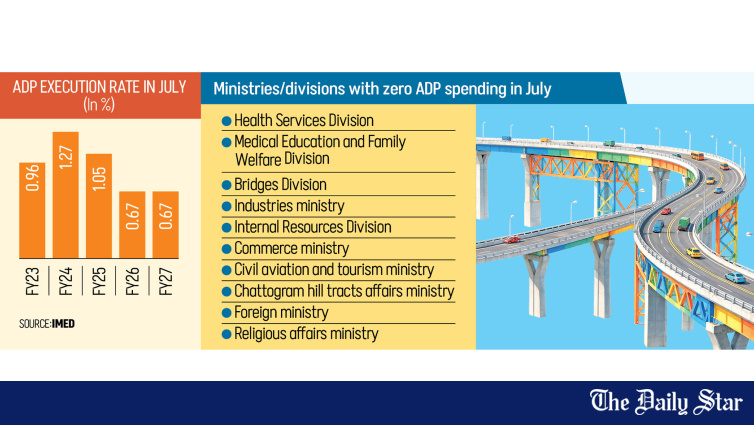
Dhaka, August 24, 2026 — Ten ministries and divisions failed to spend a single penny on development projects in the first month of the current fiscal year, according to government data released by the Implementation Monitoring and Evaluation Division (IMED). The agencies that made no progress include the Health Services Division, Medical Education and Family Welfare Division, Bridges Division, Ministry of Industries, Internal Resources Division, Ministry of Commerce, and Ministry of Civil Aviation and Tourism.
📊 The Numbers at a Glance
- 💰 ADP allocation FY2026-27: Tk 3.08 lakh crore
- 💰 Spending in July: Tk 2,121 crore (just 0.69% of allocation)
- 🚧 Ministries with zero spending: 10 out of total ministries/divisions
- 📉 Last year ADP implementation: 67.52% — lowest in 50 years
- 📈 Last year July spending: Similar pace of 0.69%
- 📜 IMED: Implementation Monitoring and Evaluation Division (under Planning Ministry)
According to data released by IMED, ministries and divisions spent only Tk 2,121 crore from the Annual Development Programme (ADP) in July 2026 — the first month of fiscal year 2026-27. This represents just 0.69 percent of the Tk 3.08 lakh crore allocation for the entire fiscal year. The spending pace was similar to July of the previous fiscal year, which eventually dragged overall ADP implementation down to 67.52 percent — the lowest implementation rate in 50 years.
🏛 Ministries and Divisions With Zero Spending
The ten agencies that failed to spend anything on development projects in July include:
- Health Services Division
- Medical Education and Family Welfare Division
- Bridges Division
- Ministry of Industries
- Internal Resources Division
- Ministry of Commerce
- Ministry of Civil Aviation and Tourism
The inclusion of critical ministries like Health Services, Bridges, and Industries in the zero-spending list is particularly concerning, as these sectors directly affect public welfare and industrial infrastructure development. The sluggish start comes despite expectations that development spending would accelerate following the formation of the new political government earlier this year.
🤔 Expert Analysis: Bureaucratic Hurdles or Deliberate Caution?
Prof Mohammad Lutfor Rahman, an economics professor at Jahangirnagar University, said the slow pace was unexpected given public expectations from the new government. "What we, as economists, as well as ordinary people, had been expecting, was that after a prolonged period of political change and the stagnation we experienced during the interim government's tenure, government spending would increase once the journey of a new democratic government began," he said.
"There was a public expectation that government spending would rise because when such spending increases, it boosts demand for day labourers and daily wage workers," Lutfor added. The latest IMED figures raise questions about whether bureaucratic hurdles are still delaying project implementation. "It raises the question: Are we still stuck in bureaucratic complications? Has the current government been unable to make the administrative machinery more dynamic?"
However, Lutfor also suggested the slow spending could reflect a deliberate effort to scrutinise projects before releasing funds. "I don't want to look at this entirely negatively. There may be a concern within the government itself. There may be instructions from within the government that this year's expenditures should be made after greater scrutiny, that various projects should be reviewed again and then implemented gradually."
He pointed to the large fiscal deficit as a possible reason for the cautious approach. "I suspect that the government itself may not have the willingness to spend the entire amount. Ultimately, if the government spends, it has to arrange the money from somewhere. That would have to come through borrowing, either domestic or foreign. So, perhaps the government is moving in a somewhat conservative manner."
Lutfor urged the government to speed up implementation, particularly on infrastructure. Citing the poor condition of many rural roads, he said inadequate maintenance increases vehicle damage and depreciation costs. "Proper maintenance and development of infrastructure can generate broader economic benefits, while at the same time creating employment opportunities for people who work on a daily-wage basis," he said.
🌐 Strategic Context for Bangladesh's Export Economy
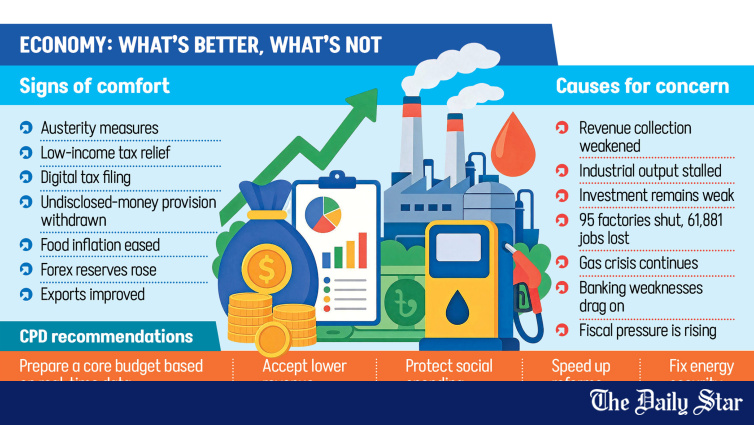
The sluggish ADP start has direct implications for Bangladesh's export economy. Many ADP-funded projects are trade-enabling infrastructure — roads, bridges, port facilities, power plants, and economic zones — that directly support export competitiveness. When ADP spending stalls, these critical infrastructure projects face delays that compound the existing challenges of energy shortages (with the gas crisis halting 100+ textile factories in Narsingdi), logistics costs at 16 percent of GDP, and banking sector stress with NPLs at 30.6 percent of total loans.
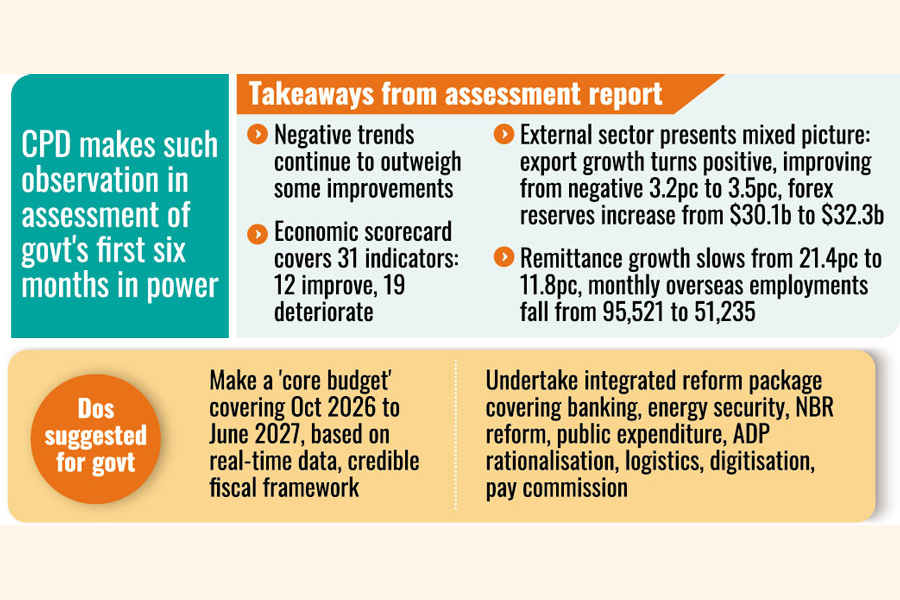
For the BNP government, the zero-spending by 10 ministries in July is particularly concerning because it suggests that the bureaucratic bottlenecks identified by the TBS economy review (which noted that import clearance takes 30-45 days instead of the regulatory 1 day) extend beyond customs and trade facilitation into the core development project implementation system. The CPD's recent assessment, which found 19 of 31 economic indicators deteriorating, specifically identified ADP implementation as one of the few areas that improved — but the IMED data for July 2026 suggests that even this improvement may not be sustained.
Without addressing these bureaucratic hurdles, the government's ambitious reform agenda — including the GED's five-year strategic framework targeting 8.5 percent GDP growth by 2031 and the planned Invest Bangladesh Authority — will struggle to gain traction. The infrastructure investment needed to support that growth depends on the ADP implementation system that is currently failing to deliver. The CPD has recommended a core budget for October 2026 to June 2027 based on real-time data, aligned with the Five-Year Strategic Framework, but this recommendation will remain academic unless the bureaucratic machinery can actually execute the projects that the budget funds. The next six months will be critical: if ADP spending does not accelerate significantly beyond the 0.69 percent July rate, the FY27 implementation rate will again fall short, perpetuating the cycle of underinvestment in the infrastructure that Bangladesh's export economy desperately needs.
This news was originally published by The Daily Star. For the full original report, please visit: https://www.thedailystar.net/business/economy/news/adp-spending-10-ministries-divisions-was-zero-july-4256041
Related on BangladeshExport
📬 Get Bangladesh Trade News in your inbox
Weekly digest of export industry news, policy updates, and market analysis.
📰 Related Stories