ADB and Bangladesh Plan Over $1 Billion Annual Investments Aligned with IGND
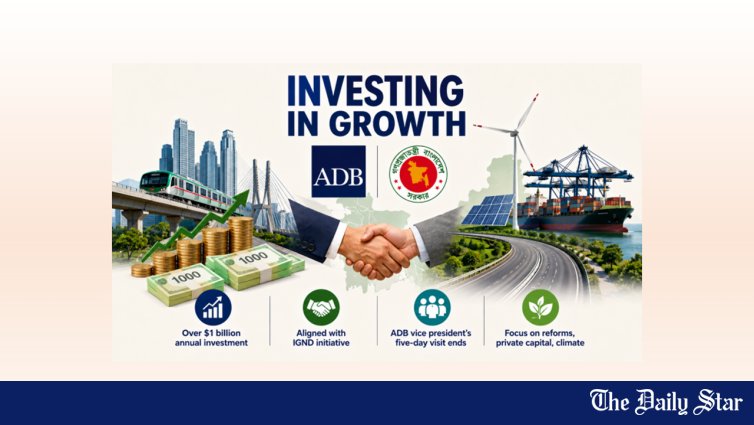
Dhaka, August 13, 2026 — The Asian Development Bank (ADB) and the government of Bangladesh have identified an annual investment pipeline of more than $1 billion aligned with the newly introduced Integrated Growth Network Development (IGND) initiative. The commitment was announced as ADB Vice-President for South, Central, and West Asia Yingming Yang concluded a high-level five-day visit to Bangladesh — signalling deepening multilateral partnership at a critical juncture for the country's economic transformation.
📊 The $1 Billion Annual Pipeline
The $1 billion annual investment commitment represents a sustained, multi-year engagement framework that will channel ADB financing into Bangladesh's priority development sectors. Key features of the pipeline:
- 💰 $1+ billion annually — sustained investment pipeline
- 🌐 Aligned with IGND — Integrated Growth Network Development initiative
- 📜 Country Partnership Strategy (CPS) — under preparation, will shape ADB's Bangladesh engagement
- 👥 Multi-sector coverage — infrastructure, energy, climate, finance, skills
- 🏢 Private capital mobilisation — ADB to help crowd-in private investment
For Bangladesh, which faces a $25 billion annual infrastructure financing gap, the ADB pipeline represents a critical piece of the development finance architecture — complementing World Bank, JICA, AIIB, and bilateral donor commitments.
🤝 Bilateral Meetings: A Comprehensive Reform Dialogue
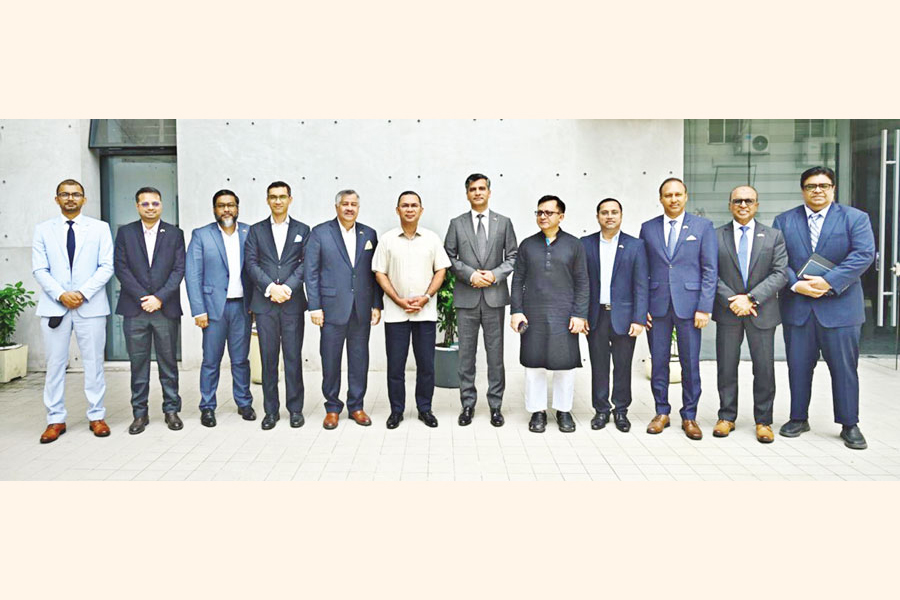
During a series of bilateral meetings with senior ministers and economic policymakers, discussions centred on tailoring ADB's next CPS to support Bangladesh's medium-term reform agenda, diversification efforts, and financial sector stability. The meetings covered:
- 🏢 Finance and Planning Minister Amir Khosru Mahmud Chowdhury — banking sector restructuring, capital market development, recapitalisation
- 🏛️ Bangladesh Bank Governor Md Mostaqur Rahman — financial sector stability, banking supervision
- ⚡ Power, Energy and Mineral Resources Minister Iqbal Hassan Mahmood — clean energy transitions, green infrastructure investment
- 🌿 Environment Minister Abdul Awal Mintoo — climate finance, biodiversity, urban disaster-resilient infrastructure
- 👥 PM's Adviser for Finance and Planning Rashed Al Mahmud Titumir — regional logistics, transport, energy, and digital hub potential
The breadth of the agenda reflects ADB's ambition to support Bangladesh across the full spectrum of its development challenges — from financial sector stability to energy transition to climate resilience.
🚢 Chattogram as the Strategic Gateway
A central theme of Yang's visit was the strategic role of Chattogram as Bangladesh's primary maritime and economic gateway. Addressing a national dissemination seminar on the IGND initiative in Chattogram, the ADB vice-president highlighted the critical role of integrated investments across:
- 🚢 Infrastructure — port, road, rail connectivity
- 📦 Logistics — warehousing, cold chain, container handling
- 🏗️ Urban development — city planning, housing, utilities
- 👥 Human capital — workforce skills, training, education
Yang noted that these integrated investments would seamlessly link domestic growth centres with regional and global supply chains — positioning Chattogram as the linchpin of Bangladesh's integration into Indo-Pacific trade flows.
The focus on Chattogram aligns with other recent government initiatives — including the Laldia Container Terminal project with APM Terminals ($550 million), the new joint CPA-customs committee for faster cargo clearance, and the broader port modernisation agenda.
💼 Skills for Industry Competitiveness Programme
As part of his field visits in Chattogram, Yang inspected progress under ADB's Skills for Industry Competitiveness and Innovation Programme — observing first-hand how targeted, industry-aligned training programmes are enhancing local productivity and workforce competitiveness. The programme reflects ADB's recognition that physical infrastructure alone is insufficient — Bangladesh also needs skilled human capital to absorb and operate modern industrial capacity.
The skills programme is particularly relevant for Bangladesh's export economy, which faces growing competition from Vietnam, Cambodia, and other regional exporters. Key outcomes include:
- 💼 Industry-aligned curricula — training matched to actual employer needs
- 👥 Workforce productivity gains — measurable output per worker improvements
- 🏭 Industrial competitiveness — supports higher-value manufacturing
- 🧑🎓 Youth employment — pathways for young Bangladeshis into skilled jobs
- 🧵 RMG and textile focus — training for the country's largest export sector
🌐 Strategic Context: ADB's Evolving Bangladesh Engagement
The $1 billion annual pipeline builds on a long-standing ADB-Bangladesh partnership. ADB doubled its Bangladesh financing in 2025, reflecting the multilateral's confidence in the country's reform trajectory and development potential. The next Country Partnership Strategy (CPS) — currently being finalised — will provide the formal framework for ADB's engagement over the coming years.
The CPS will be shaped by inputs gathered across Yang's bilateral talks, as well as discussions with civil society, private sector leaders, and multilateral development partners. The inclusive consultation process signals ADB's commitment to a Bangladesh-led development agenda — aligned with the government's own reform priorities rather than imposed from outside.
🏛️ The IGND Framework: A New Approach to Growth
The Integrated Growth Network Development (IGND) initiative — the framework aligning ADB's $1 billion pipeline — represents a new approach to Bangladesh's development planning. Unlike traditional sector-by-sector investment, IGND emphasises:
- 🌐 Integrated network approach — connecting growth centres across regions
- 👥 Reform-investment-institution alignment — reforms, investments, and institutions working together
- 🚢 Connectivity focus — transport, logistics, digital infrastructure
- 💼 Productivity enhancement — skills, technology, innovation
- 🌏 Regional supply chain integration — linking domestic growth to global markets
Yang framed IGND as a government-led initiative with ADB providing the framework for aligning reforms, investments, and institutions to unlock opportunities across regions, strengthen connectivity and productivity, and support Bangladesh's long-term growth ambitions.
📊 Why This Matters for Bangladesh's Export Economy
The ADB-Bangladesh $1 billion pipeline carries significant implications for the country's export competitiveness:
- 🚢 Port and logistics investment — directly reduces export lead times and costs
- ⚡ Clean energy transition — supports ESG-compliant manufacturing for Western buyers
- 💼 Skills development — builds workforce for higher-value manufacturing
- 🏛️ Financial sector stability — ensures trade finance availability for exporters
- 🌿 Climate-resilient infrastructure — protects export supply chains from climate disruption
- 🌐 Regional connectivity — opens new overland export corridors to South and Southeast Asia
For an export economy preparing for LDC graduation in November 2026 and urgently diversifying beyond RMG, the ADB pipeline represents one of the most significant multilateral development commitments of the year — anchoring the country's medium-term development finance strategy.
Yang captured the strategic significance succinctly: “Bangladesh is entering an important phase of its development journey, with a growing need to strengthen competitiveness, mobilise private investment, and build resilience.” The $1 billion annual pipeline is ADB's concrete answer to that need.
This news was originally published by The Daily Star. For the full original report, please visit: https://www.thedailystar.net/business/news/bangladesh-adb-plan-over-1-billion-annual-investments-4246926
Related on BangladeshExport
📬 Get Bangladesh Trade News in your inbox
Weekly digest of export industry news, policy updates, and market analysis.
📰 Related Stories