Oil Touches $110 A Barrel For First Time Since May Amid Middle East Tensions
Brent crude settles $3.94 higher at $109.86 — highest since May 19; WTI closes at $101.41 — highest since September 17; escalation fears resurface on Saudi energy infrastructure attack rumours.
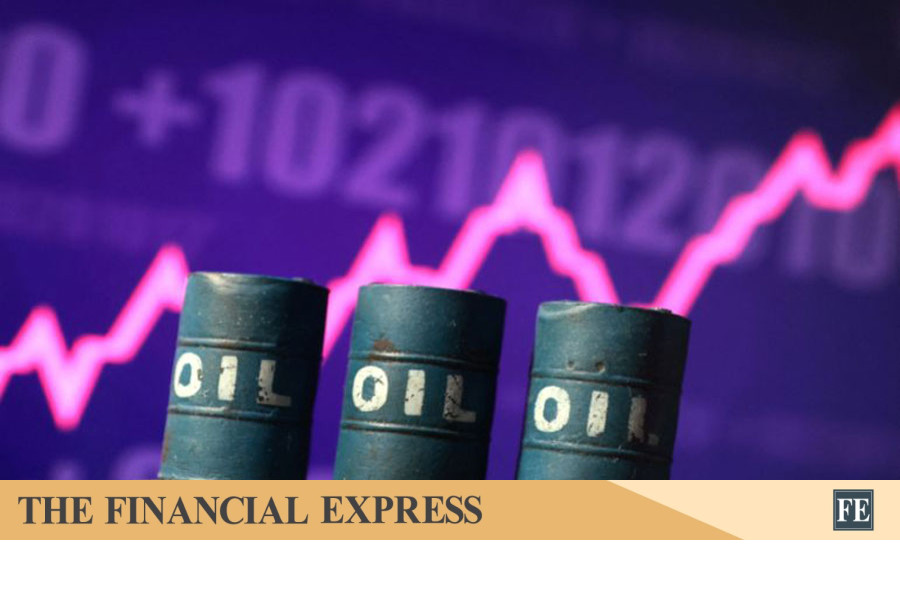
📨 Brent has touched $110 a barrel for the first time since May amid worries that escalating Middle East tensions could further tighten supplies. Brent crude futures settled $3.94, or 3.7 per cent, higher at $109.86 on Friday, the highest since May 19, while US West Texas Intermediate (WTI) crude futures closed $3.44, or 3.5 per cent, higher at $101.41, the highest since September 17.
📊 "WTI and Brent reversed earlier losses as escalation fears resurfaced amid rumours of attacks on Saudi energy infrastructure," research and consultancy firm Energy Aspects said in a note. The reversal of earlier losses — driven by speculation about a possible US-Iran diplomatic breakthrough — into a strong close above $109 reflects the market''s assessment that the risk of further supply disruptions remains high.
🏛 Why the $110 milestone matters
The $110 per barrel milestone is significant for several reasons. First, it represents a return to the elevated price levels seen during the peak of the US-Iran conflict earlier in 2026, when prices spiked to $284.95 per barrel in April before retreating. The return to $110 suggests that the oil market is pricing in a sustained period of supply tightness rather than a temporary disruption.
Second, $110 per barrel is well above the level that many oil-importing countries — including Bangladesh — have budgeted for in their fiscal planning. For Bangladesh, where Bangladesh Petroleum Corporation (BPC) has been incurring massive losses from the gap between elevated international prices and capped domestic prices, sustained prices at $110 or above will continue to put pressure on the country''s fuel subsidy bill and foreign exchange reserves.
Third, the $110 level reflects a meaningful risk premium in oil prices — above what pure supply-demand fundamentals would suggest. The premium reflects the market''s assessment of the probability of further supply disruptions, including potential attacks on Saudi energy infrastructure, further closure of strategic shipping lanes, and escalation of the broader Middle East conflict.
👥 Saudi energy infrastructure concerns
The rumours of attacks on Saudi energy infrastructure referenced by Energy Aspects are particularly significant for the oil market. Saudi Arabia is one of the world''s largest oil producers and exporters, and any disruption to its production or export capacity would have a major impact on global oil supplies. Saudi Aramco''s facilities have been targeted in previous attacks — including the 2019 Abqaiq-Khurais attacks that temporarily knocked out roughly 5% of global oil supply.
If Saudi energy infrastructure is successfully attacked, the resulting supply disruption could push oil prices significantly higher — potentially back toward the $200+ levels seen at the peak of the US-Iran conflict. Even unsuccessful attacks or credible threats of attacks can disrupt oil exports by forcing Saudi Arabia to redirect shipments, increase insurance costs for vessels operating in the region, and trigger defensive military responses that further destabilise the region.
🌏 Implications for Bangladesh
For Bangladesh, the $110 oil price has significant implications across multiple dimensions. The Bangladesh Petroleum Corporation (BPC) has already incurred losses of Tk 228.76 billion between March and August 2026 as it absorbed the gap between elevated international prices and capped domestic prices. At $110 per barrel, the gap between international and domestic prices remains substantial — particularly for diesel, which accounts for about 65% of Bangladesh''s petroleum product consumption.
The government''s recent fuel price adjustment on 21 September — which raised prices of diesel, kerosene, octane, and petrol by Tk 20 per litre — narrowed but did not eliminate the gap. With international prices now back at $110, the BPC''s financial strain is likely to continue, potentially requiring further domestic price adjustments or additional financial support from the government.
Higher oil prices also have broader macroeconomic implications for Bangladesh. They translate into higher import costs, which put pressure on the trade balance and foreign exchange reserves. They feed into domestic inflation through higher transport costs, which affects the prices of essential commodities. And they constrain economic growth by raising operating costs for businesses across the economy.
💰 LNG market implications
The elevated oil prices also have implications for the LNG market, which is closely linked to oil prices through long-term supply contracts. Bangladesh has been facing LNG supply disruptions from QatarEnergy — which has suspended shipments until November — and the prospect of sustained elevated oil prices suggests that LNG prices will also remain elevated, further complicating Bangladesh''s energy security situation.
The combined impact of elevated oil and LNG prices — against the backdrop of supply disruptions — creates a particularly challenging energy security environment for Bangladesh. The country''s heavy dependence on imported fossil fuels has exposed it to the full force of the Middle East conflict''s energy market disruptions, with significant macroeconomic consequences.
🤝 Looking ahead
The oil market outlook for the coming weeks and months will depend on several factors: the trajectory of the US-Iran conflict, the security of Saudi energy infrastructure, the effectiveness of diplomatic efforts to de-escalate regional tensions, and the broader supply-demand balance in global oil markets. Any of these factors could push prices higher or lower in the short term.
For Bangladesh, the priority must be to manage the macroeconomic consequences of sustained elevated oil prices while building longer-term resilience through energy diversification, storage expansion, and renewable energy deployment. The country cannot control international oil prices — but it can control how it responds to them, through prudent fiscal management, monetary policy, and strategic investments in energy security.
The coming weeks will show whether oil prices stabilise around $110, push higher toward $120-130, or retreat back below $100. For Bangladesh''s macroeconomic stability, the difference matters — but the broader lesson is that the country needs to prepare for a sustained period of elevated energy prices, regardless of short-term price movements.
This news was originally published by The Financial Express. For the full original report, please visit: https://thefinancialexpress.com.bd/trade/oil-touches-110-a-barrel-for-first-time-since-may
📬 Get Bangladesh Trade News in your inbox
Weekly digest of export industry news, policy updates, and market analysis.
📰 Related Stories