Japan Readies $6.35 Billion Private Investment Package For Bangladesh Visit
One-trillion-yen five-year package spanning manufacturing, energy and the Matarbari economic zone tops the agenda of Prime Minister Tarique Rahman's Tokyo summit
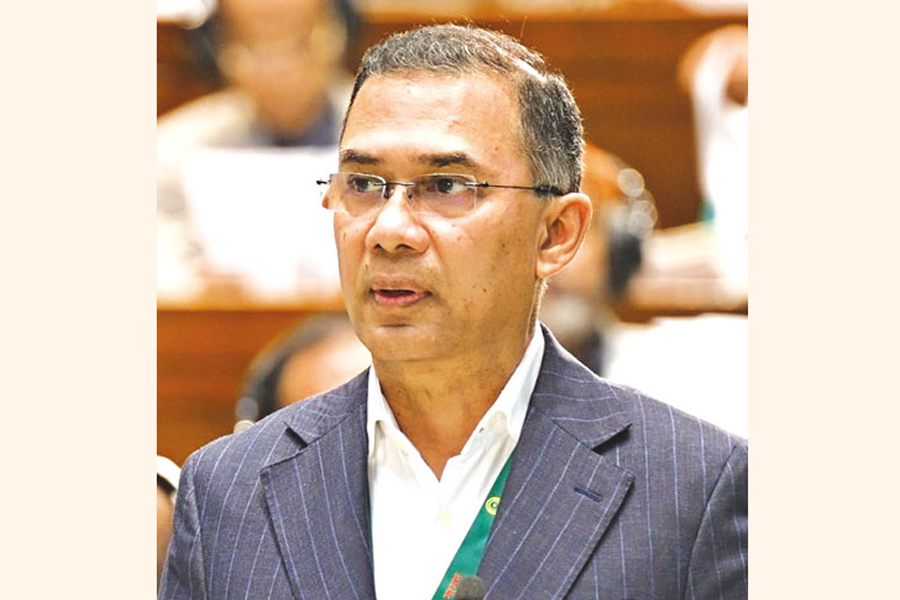
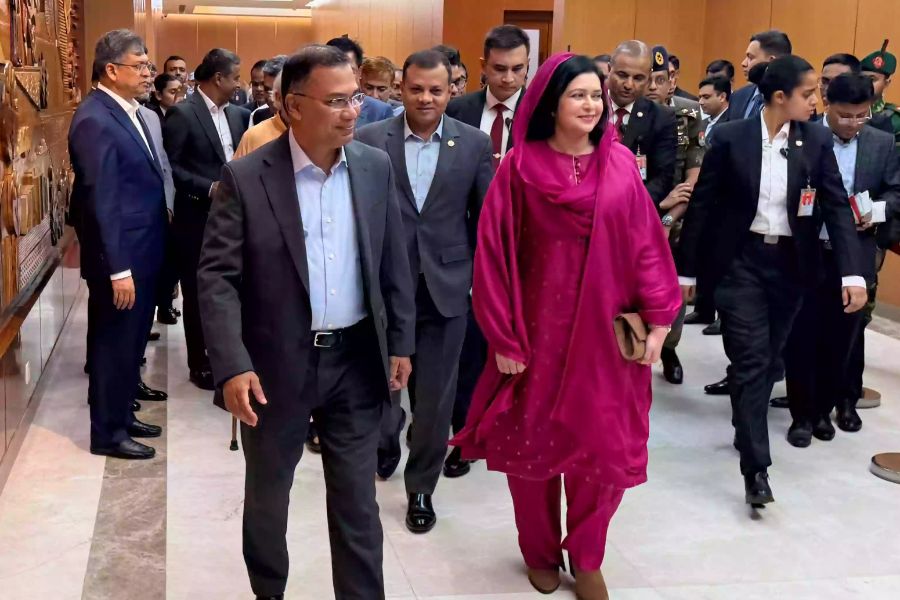
🤝 Japan will arrange an investment package worth about 1 trillion yen ($6.35 billion) in private-sector funds for Bangladesh over the next five years — a commitment first flagged by Japan's Nikkei newspaper and now expected to anchor a joint statement during Prime Minister Tarique Rahman's four-day state visit to Tokyo. The prime minister was set to leave Dhaka for Tokyo with a wide agenda of engagement with his Japanese counterpart, Sanae Takaichi, and other high-ups, turning the tour into the most consequential economic diplomacy exercise between the two countries in years.
💰 According to the Nikkei report, the investments are expected to flow into automobile and other manufacturing industries as well as the construction of energy facilities, and will involve companies entering the Bangladesh Special Economic Zone being developed with Japanese trading house Sumitomo Corporation. During the visit, Japanese private-sector investors are likely to formally announce the $6.35 billion five-year commitment, although the precise terms and financing arrangements remain subject to discussion, officials in Dhaka indicated.
📋 A $13.8 billion cooperation proposal on the table
📚 Beyond the private-sector package, officials said Bangladesh was preparing to propose an investment and cooperation package worth $13.8 billion for the 2026-31 period, covering 12 priority sectors. The envisaged breakdown includes $3.45 billion for transport and urban connectivity, $3.14 billion for integrated industrial, port and commercial hubs including Matarbari, $1.57 billion for manufacturing and electronics, $1.26 billion for energy and green transformation, and $940 million for climate-resilient infrastructure. A further $3.45 billion would cover agriculture, pharmaceuticals, information technology, the blue economy, tourism and small and midsize enterprises.
🌏 For Dhaka, the immediate priority is to attract Japanese companies seeking to diversify manufacturing bases beyond China under the China-plus-one strategy. Tokyo announced incentives in 2020 to encourage companies to diversify supply chains, and Vietnam and other regional economies have captured much of that wave — Bangladesh is now positioning itself for a share. Officials say Bangladesh would seek to turn Japan's search for alternatives to China into a fresh wave of investment by offering policy support and the right inducements, with recent visits by senior executives from Toyota, Mitsui and Marubeni adding momentum to the drive.
📊 Trade foundation: $3.31 billion and growing
🛖 Trade relations provide a strong foundation for the deeper partnership. Bangladesh's exports to Japan have increased substantially over the past decade, driven largely by demand for competitively priced garments, and annual shipments have exceeded $1.0 billion since the financial year 2015-16. According to Export Promotion Bureau data, exports to Japan reached $1.9 billion in 2022-23 before fluctuating in subsequent years, while two-way trade rose to more than $3.31 billion in 2024-25, up from $3.12 billion the previous year. Japan is now Bangladesh's ninth-largest export destination worldwide and its second-largest in Asia.
✅ Duty-free access has helped Bangladeshi manufacturers compete in Japan, and Tokyo has committed to extending relevant preferential access for three years after Bangladesh graduates from least-developed-country status, giving exporters a limited window to prepare. The implementation of the Japan-Bangladesh Economic Partnership Agreement — signed in Tokyo on 6 February 2026 as Bangladesh's first agreement of its kind — is expected to be a central issue during the visit, as both sides work to convert preferential terms into durable market access.
🚧 The Big-B vision and the Matarbari anchor
⛰ Japan's ambitions extend well beyond bilateral commerce. Tokyo sees the proposed Matarbari deep-sea port on Bangladesh's southeastern coast as the anchor of its Big-B initiative — a regional economic vision intended to connect industrial centres in northeastern India with the Bay of Bengal and south-east Asian markets through improved transport and supply chains. Japan has been financing the port's development, which is expected to let Bangladesh handle larger vessels and reduce dependence on regional transshipment hubs such as Singapore and Colombo.
🗺 The Maheshkhali-Matarbari Integrated Infrastructure Development Initiative is expected to feature in the discussions, and Japan hopes the wider corridor could eventually connect Bangladesh with India's seven northeastern states as well as Nepal and Bhutan. The vision, however, faces practical obstacles: the Maitri Bridge over the Feni river linking Bangladesh with India's Tripura state has remained non-operational amid tensions in bilateral relations — a reminder that infrastructure alone does not create functioning trade corridors without political cooperation.
🚉 Better loan terms on the wishlist
💳 Tarique Rahman is also expected to seek better financial terms for major Japanese-supported infrastructure projects, including Dhaka's metro-rail system. Lower borrowing costs, faster implementation and timely completion of projects will be among the priorities in his talks with Japanese officials — a significant point given the debt-service burden that yen-denominated project loans have added to Bangladesh's external obligations.
🗓 The itinerary reflects the breadth of the agenda. The prime minister will hold a summit meeting with Premier Sanae Takaichi on Tuesday, followed by a joint press conference and luncheon, with discussions covering trade, investment, infrastructure, development cooperation and regional and international issues. He will also meet Japanese business leaders and representatives of the Japan International Cooperation Agency (JICA), the Japan Bank for International Cooperation (JBIC) and the Japan External Trade Organization (JETRO), and visit energy facilities, logistics operations and Toyota's manufacturing complex to explore investment and technology partnerships.
🏢 At the Bangladesh-Japan Economic Forum in Tokyo, the prime minister is expected to encourage Japanese companies to establish factories in Bangladesh, expand production and support skills development. Officials are also discussing memorandums of understanding covering agriculture, fisheries, aviation, education, renewable energy, environmental protection, science and technology, and human-resource development — several of which may be signed during the tour.
🔭 What to watch
📈 Japan has been one of Bangladesh's principal development partners since independence, and the visit will test whether that partnership can evolve from aid-led cooperation into an investment-driven relationship. For Bangladesh, the prize is not simply more Japanese capital but stronger industrial capacity, export diversification and better-paid jobs; for Japan, Matarbari offers a potential gateway to a wider regional production network. The challenge, as ever, is converting expressions of interest — Nikkei's report noted the package still awaited final confirmation — into signed commitments, bankable projects and factories on the ground. Whether the two sides can overcome the logistical and political barriers that have long constrained regional connectivity will decide if the trillion-yen promise becomes a transformative story or just another headline.
This news was originally published by The Financial Express. For the full original report, please visit: https://thefinancialexpress.com.bd/economy/bd-eyes-big-investment-japan-espouses-big-b-vision-execution
Related on BangladeshExport
📬 Get Bangladesh Trade News in your inbox
Weekly digest of export industry news, policy updates, and market analysis.
📰 Related Stories