Garment Unions Demand $260 Minimum Wage as Living Costs Soar
IndustriALL Bangladesh Council cites fuel-driven transport costs and the government pay award in its emergency committee demand
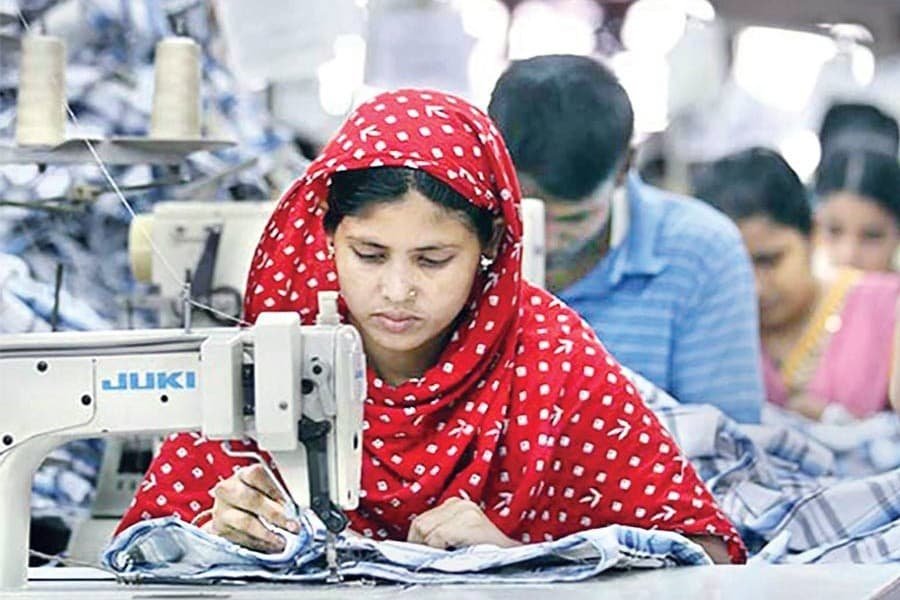
👕 The IndustriALL Bangladesh Council (IBC) has demanded a minimum monthly wage of US$260 for garment workers, citing soaring living costs and escalating market volatility. The demand was finalised during an emergency meeting of the IBC central executive committee held on Saturday, presided over by IBC President Mir Abul Kalam Azad, with labour leaders including General Secretary Salauddin Shapon and vice presidents Amirul Haque Amin, Chaina Rahman, Ruhul Amin, Babul Akhter and Rashedul Alam Raju in attendance.
💸 The economics behind the demand are laid out bluntly. In a press release issued on Sunday, the council stated that skyrocketing prices of essential commodities, surging transport fares due to fuel price hikes, and rising medical expenses have made it extremely difficult for garment workers to support their families on their current wages. Furthermore, the recent 100 to 142 percent salary hike for government employees has triggered another wave of market instability, deepening the financial crisis for low-income people — a reference to the way the public-sector pay award has rippled through rents, service charges and everyday prices. Highlighting these pressing economic realities, the IBC formally proposed $260 as the minimum wage.
📋 The council said it would shortly announce wage structures for other grades and submit a comprehensive written proposal to the wage board chairman and worker representatives once the full wage board is officially formed — signalling that the demand is the opening position of a formal negotiation rather than a street slogan.
💳 The arithmetic of a demand
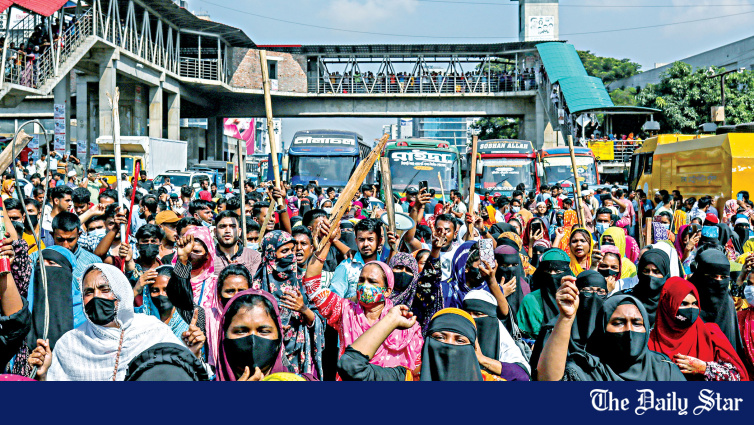
📊 At current exchange rates, $260 translates to roughly Tk 32,000 per month — more than two and a half times the Tk 12,500 minimum that garment workers' lowest grade received after the last wage revision, which followed dramatic protests. That 2023 settlement, reached after factory shutdowns and unrest in the industrial belts, set the floor that unions now argue has been eaten away by two years of inflation, taka depreciation and successive fuel-price adjustments. For a worker spending a large share of income on food and transport — the two categories that have risen fastest — the real value of a fixed wage falls every quarter that prices climb.
🌏 The demand also lands in a sector under unique pressure. Export orders remain soft in key Western markets, buyers continue pressing on price, and the industry is navigating the cost implications of LDC graduation and compliance investments — all arguments factory owners will bring to the wage board. Unions counter, as they long have, that a sector generating tens of billions of dollars in export earnings can price in a living wage, and that wage stagnation has itself become a reputational and productivity risk: experienced operators leave for other industries, attrition costs climb, and audits capture the discontent before buyers do.
⚖ The wage board process ahead
🗳 Bangladesh's minimum wage for garment workers is set through a tripartite wage board — representatives of government, factory owners and workers — whose formation typically follows union petitions and whose proceedings have historically taken months. The IBC's announcement of grade-wise structures and a comprehensive written proposal indicates the labour side intends to arrive at the table with a fully costed position rather than a single number. Employers' associations will respond with their own calculations of what the industry can absorb amid current order books, and the government will weigh both against social stability and export competitiveness — the triangle of interests that has defined every RMG wage round since the industry's expansion.
🔭 History offers a caution and a precedent in the same breath: the 2023 wage round showed both how costly delay can be — in disruptions, lost production days and international headlines — and that substantial increases are achievable when the board finally moves. With living costs still climbing and a $260 floor now formally on the table, the coming months of wage board deliberation will be among the most consequential for the industry's four million workers and for the buyers abroad whose sourcing decisions watch Bangladesh's labour story closely. Both sides now have their opening positions; the arithmetic of compromise begins from here.
📈 The buyer dimension deserves weight in any honest accounting. Global apparel brands have faced their own decade of scrutiny over Bangladeshi wages, and several have publicly committed to pricing that supports fair pay increases at their supplier factories. Union leaders will aim to convert those commitments into wage-board pressure, arguing that a sector whose largest customers advertise ethical sourcing should not require industrial unrest to fund a subsistence adjustment. Factory owners, for their part, will note that order prices have not risen in step with these promises — a familiar impasse in which the gap between buyer rhetoric and buyer purchasing behaviour is the terrain on which every wage round is actually fought.
🏢 There is also a productivity argument the IBC position implicitly advances: better-paid workforces are demonstrably more stable, more skilled and less prone to the turnover that undermines quality and delivery reliability. International buyers increasingly score suppliers on retention and workforce maturity alongside price, meaning a credible wage settlement functions as market positioning rather than pure cost. The wage board that recognises this will be negotiating not just this year's payroll but the industry's standing in the global sourcing league tables — and with Vietnam, India and Cambodia courting the same buyers, standing is not a soft variable.
This news was originally published by The Financial Express. For the full original report, please visit: https://thefinancialexpress.com.bd/trade/ibc-wants-260-as-minimum-wage-for-rmg-workers
📬 Get Bangladesh Trade News in your inbox
Weekly digest of export industry news, policy updates, and market analysis.
📰 Related Stories