Bangladesh Ranks 84th In Global Hunger Index 2026 With Score Of 19.2 In Moderate Hunger Category
Country ahead of India (100th) and Pakistan (106th) but behind Nepal; 8.2% of population undernourished, 24% of children under 5 stunted, 12.9% suffer from wasting.
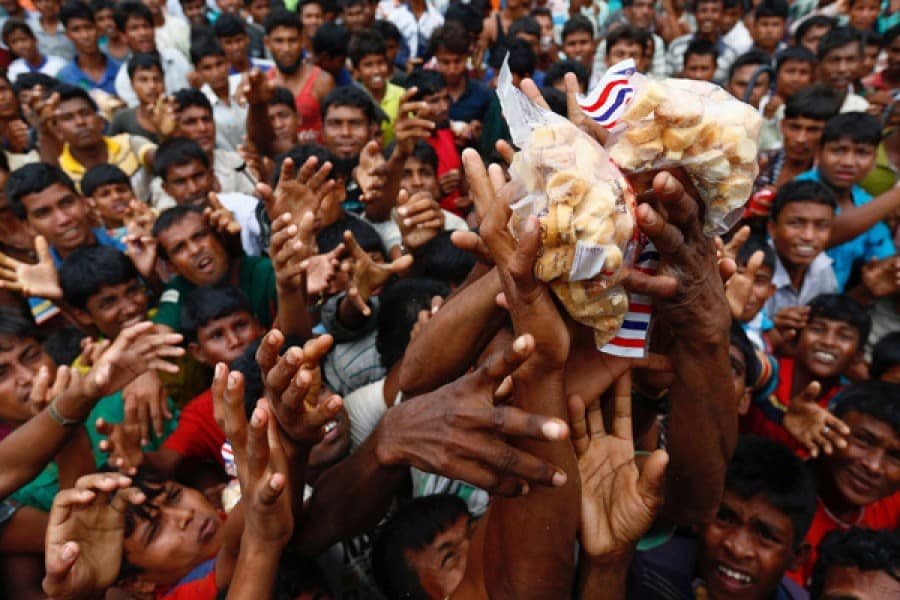
🍴 Bangladesh has ranked 84th in the Global Hunger Index (GHI) 2026, with a score of 19.2, placing the country in the "moderate" hunger category. The index assesses hunger and undernutrition using four indicators: undernourishment, child stunting, child wasting and under-five mortality. Bangladesh ranked ahead of India and Pakistan but behind Nepal in the index, which assesses hunger and undernutrition across countries, reports UNB.
📊 India ranked 100th with a score of 24.1 while Pakistan stood at 106th with a score of 25.5. Both countries fell into the "serious" hunger category, according to the report. A lower GHI score indicates a lower level of hunger, while rankings reflect countries'' relative positions among those included in the assessment. The Global Hunger Index is published annually by Concern Worldwide, Welthungerhilfe and the Institute for International Law of Peace and Armed Conflict (IFHV) to track hunger and undernutrition worldwide.
🏛 Bangladesh''s hunger indicators
The 2026 Global Hunger Index report shows that in Bangladesh:
- 📊 Undernourishment: 8.2 per cent of the population is undernourished — meaning they do not have access to sufficient calories for a healthy, active life.
- 📊 Child stunting: 24 per cent of children under five suffer from stunting (low height for age) — a sign of chronic undernutrition that affects cognitive development and lifetime earning potential.
- 📊 Child wasting: 12.9 per cent of children under five suffer from wasting (low weight for height) — a sign of acute undernutrition that increases the risk of child mortality.
- 📊 Under-five mortality: 3.0 per cent of children die before reaching their fifth birthday — a reflection of the combined impact of undernutrition, infectious diseases, and inadequate healthcare.
👥 Progress on child stunting
Bangladesh has made progress in reducing child stunting over the past two decades. The proportion of children under five affected by stunting fell from 54.9 per cent (in earlier measurements) to the current level of 24 per cent — a meaningful improvement that reflects the combined impact of economic growth, improved nutrition programmes, better healthcare access, and improved sanitation. This progress demonstrates that sustained policy attention to child nutrition can deliver tangible results over time.
However, the current stunting rate of 24 per cent still represents a significant public health challenge. Stunting in children is associated with irreversible cognitive damage, reduced educational attainment, lower lifetime earnings, and intergenerational transmission of poverty. Reducing stunting further — toward the World Health Organization''s target of below 15 per cent — should remain a high priority for Bangladesh''s public health and development agenda.
🌏 Regional comparison
Bangladesh''s position relative to its South Asian neighbours in the Global Hunger Index is significant. The country''s score of 19.2 ("moderate" hunger) is better than India''s 24.1 and Pakistan''s 25.5 (both "serious" hunger), but worse than Nepal''s score, which puts it ahead of Bangladesh. The regional comparison provides important context for assessing Bangladesh''s performance — the country is doing better than two of its largest South Asian neighbours, but there is still significant room for improvement.
The fact that Bangladesh outperforms India and Pakistan on the Global Hunger Index is notable given that India has a much larger economy and Pakistan has historically had higher per capita income. Bangladesh''s better performance reflects the country''s relatively stronger focus on social development — particularly in areas such as female education, child nutrition, and healthcare access — which has paid dividends in terms of hunger reduction.
💰 The 2026 global hunger context
The 2026 Global Hunger Index report warns that global hunger is rising again, with conflicts, climate shocks and economic crises threatening food security. The Middle East conflict, the ongoing war in Ukraine, climate-related disasters in various regions, and the global economic slowdown have all contributed to a deterioration in global food security. For Bangladesh, the global context means that further progress on hunger reduction will require sustained effort — and may face headwinds from elevated food prices, supply disruptions, and macroeconomic pressures.
Bangladesh''s macroeconomic challenges — including elevated inflation (running at 8.26% in August 2026), weak private sector credit growth, and pressure on foreign exchange reserves — could affect the country''s ability to make further progress on hunger reduction. High food inflation, in particular, can push vulnerable households into food insecurity by reducing their purchasing power.
🤝 Looking ahead
For Bangladesh, the 2026 Global Hunger Index provides both encouragement and caution. The country''s better performance relative to India and Pakistan is encouraging — it shows that Bangladesh''s development model, with its emphasis on social development, can deliver results. The progress on child stunting over the past two decades is a testament to the effectiveness of sustained policy attention to nutrition.
However, the remaining challenges — particularly the 8.2% undernourishment rate, the 12.9% child wasting rate, and the 3.0% under-five mortality rate — require continued attention. Bangladesh needs to sustain and accelerate its efforts to reduce hunger, particularly in the context of global food security challenges and domestic macroeconomic pressures.
The coming years will show whether Bangladesh can continue to make progress on hunger reduction, or whether the global and domestic headwinds will slow or reverse the gains of the past two decades. The country''s ranking in the 2027 Global Hunger Index will be a key indicator of whether Bangladesh is on track to eliminate hunger — or whether the country is at risk of falling behind.
This news was originally published by The Financial Express. For the full original report, please visit: https://thefinancialexpress.com.bd/bangladesh/bangladesh-ranks-84th-in-global-hunger-index-2026
📬 Get Bangladesh Trade News in your inbox
Weekly digest of export industry news, policy updates, and market analysis.
📰 Related Stories