Jackfruit of Gazipur: Bangladesh National Fruit GI — Buyer's Guide (2026)
Jackfruit of Gazipur — Bangladesh's 2024 GI national fruit, golden-yellow sweet flesh from Madhupur Tract. Buyer's guide: plant-based-food demand, HS 08109010/90, 7-point authenticity, 709 agriculture suppliers.
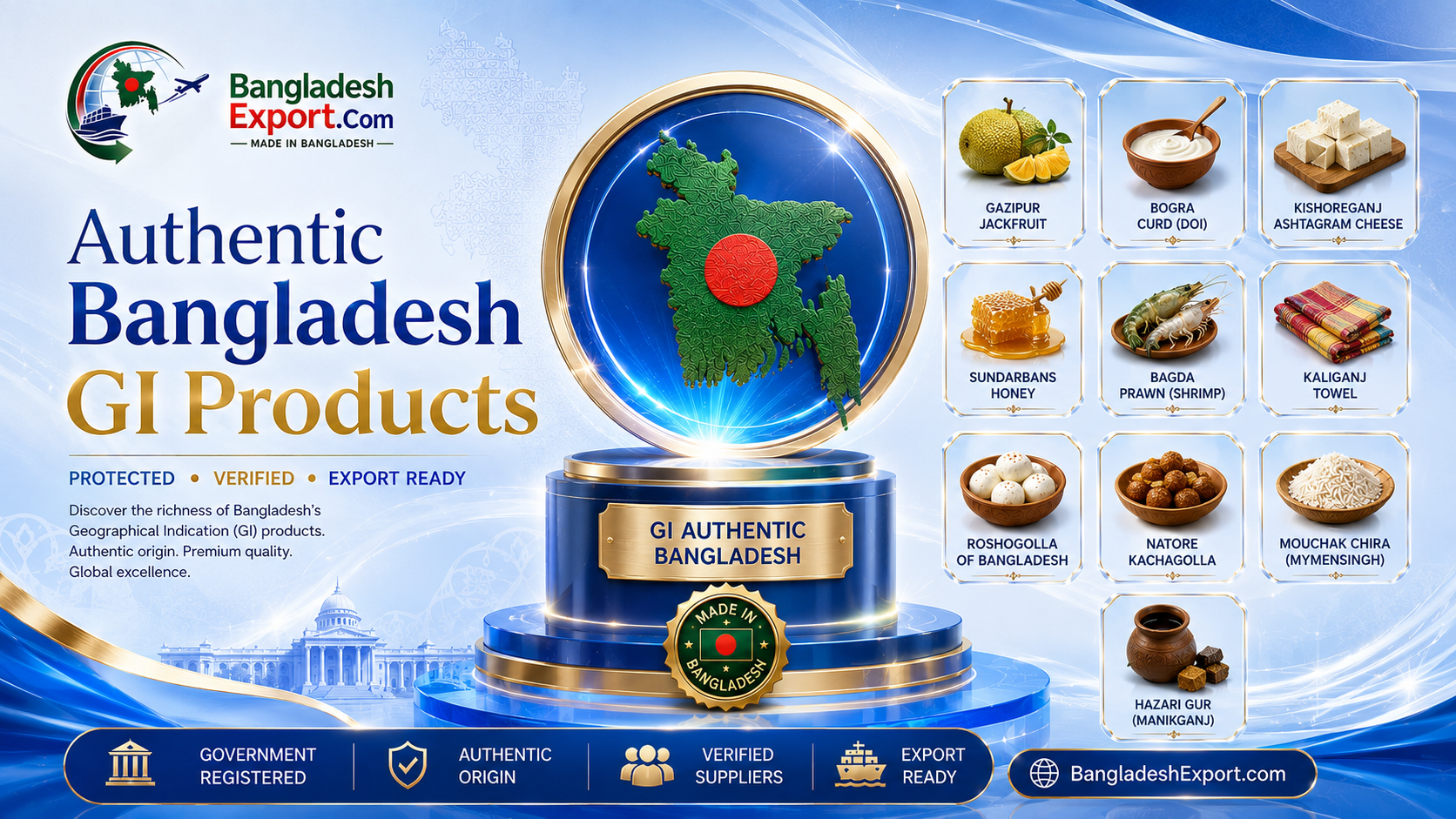
Jackfruit of Gazipur — registered as a Bangladesh GI product in 2024 — is the national fruit of Bangladesh, and the Gazipur district produces some of the country's finest specimens. The Gazipur region, situated on the Madhupur Tract (a raised Pleistocene terrace with well-drained reddish soil), creates unique growing conditions that produce jackfruit with exceptional sweetness, golden-yellow flesh color, and superior aroma. Jackfruit is the largest tree-borne fruit in the world — individual fruits can weigh 5–25 kg — and the Gazipur-grown variety has developed a reputation among Bangladeshi consumers for being the sweetest and most flavorful available. For international buyers in the tropical-fruit, diaspora-food, and plant-based-food segments, authentic Gazipur Jackfruit offers a genuinely unique product with growing global demand driven by the plant-based-food movement's search for natural meat alternatives.
This guide is for international tropical-fruit importers, diaspora grocers, plant-based-food manufacturers, and ethnic-food distributors sourcing authentic Jackfruit of Gazipur. We'll cover the fruit's history and cultural significance, the 2024 GI registration, the Gazipur production region and Madhupur Tract terroir, quality characteristics and grading, export markets, HS codes, packaging and cold-chain logistics, authenticity verification, and direct sourcing from verified agriculture suppliers on BangladeshExport.com.
📜 History & Cultural Significance
Buyers can verify the official list of Bangladesh's registered Geographical Indication (GI) products through the Bangladesh Trade Portal: bangladeshtradeportal.gov.bd — GI Products Page
Jackfruit (Artocarpus heterophyllus) has been cultivated in Bengal for over 2,000 years and is the national fruit of Bangladesh — a designation that reflects its deep cultural and culinary significance. In rural Bengali life, the jackfruit tree is a multipurpose resource: the fruit is eaten fresh, cooked as a vegetable (when unripe), or processed into chips and preserves; the seeds are roasted or boiled as a snack; the wood is used for furniture and musical instruments; the leaves are used as cattle feed. No other fruit tree in Bangladesh provides such comprehensive utility.
The Madhupur Tract's specific geology — a raised Pleistocene terrace with well-drained, slightly acidic reddish soil (locally called "lal mati") — creates ideal conditions for jackfruit cultivation. The well-drained soil prevents waterlogging (which jackfruit trees cannot tolerate), the slightly acidic pH promotes nutrient uptake, and the soil's iron-rich mineral composition contributes to the fruit's characteristic golden-yellow flesh color and higher sugar content. Jackfruit grown in the alluvial floodplains of southern Bangladesh (where the soil is heavier and less well-drained) produces fruit with paler flesh, lower sugar content, and more fibrous texture — the Madhupur Tract difference is measurable and significant.
The 2024 GI registration — part of the historic wave that expanded Bangladesh's GI register — formally protected the "Jackfruit of Gazipur" name, distinguishing it from jackfruit grown in other Bangladeshi districts and from jackfruit imported from India, Sri Lanka, or Southeast Asia. See our complete 60-product GI list and our Pineapple of Madhupur guide (the other Madhupur-Tract GI fruit) and Bedana Litchi guide for other GI fruits from Bangladesh.
🏛️ GI Registration & the Gazipur Production Region
Jackfruit of Gazipur was registered as a Bangladesh GI product in 2024 by DPDT. The registered production region is Gazipur district — situated just north of Dhaka on the Madhupur Tract. The primary cultivation areas include Gazipur Sadar, Sreepur, Kaliakair, and Kaliganj upazilas. The GI registration covers Artocarpus heterophyllus grown in the registered region using traditional cultivation methods. Verification follows our GI verification guide.
🍈 Quality Characteristics & the Madhupur Tract Difference
What makes Gazipur jackfruit distinct from jackfruit grown in other regions? The answer lies in the Madhupur Tract's specific soil conditions:
Sweetness: The well-drained, iron-rich lateritic soil of the Madhupur Tract promotes higher sugar accumulation in the fruit. Premium Gazipur jackfruit typically tests at 18–22° Brix — significantly sweeter than floodplain-grown jackfruit (12–16° Brix). The soil's potassium content (essential for sugar transport in plants) is higher in the lateritic soil than in alluvial soil, directly contributing to the fruit's superior sweetness.
Flesh color: The Madhupur Tract's iron-rich soil produces fruit with a deeper, more vibrant golden-yellow flesh color — visually distinct from the paler yellow of floodplain-grown jackfruit. The color difference is noticeable enough that experienced buyers can distinguish Gazipur jackfruit by visual inspection alone.
Fiber quality: Gazipur jackfruit has softer, less fibrous flesh than floodplain-grown fruit. The softer texture makes the fruit more pleasant to eat fresh and easier to process into pulp, chips, or plant-based-food products. The lower fiber content is attributed to the soil's moisture-regulating properties — the well-drained soil provides consistent (not excessive) moisture, producing fruit with optimal flesh development.
Aroma: Premium Gazipur jackfruit has a distinctive strong, sweet, tropical aroma — a complex blend of fruity, floral, and musky notes that is more pronounced than in jackfruit from other regions. This aromatic intensity is valued in both fresh-fruit and processed-product applications.
| Grade | Fruit Weight | Flesh Color | Sweetness | Fiber | Retail Range (USD/kg) |
|---|---|---|---|---|---|
| A Premium | 8–15 kg | Deep golden-yellow | 18–22° Brix | Soft, low fiber | 3–7 |
| A Standard | 5–8 kg | Golden-yellow | 14–18° Brix | Standard fiber | 2–4 |
| B Grade | 3–5 kg | Pale yellow | 10–14° Brix | More fibrous | 1–2 |
Authentic Gazipur jackfruit: large fruit (5–15 kg), deep golden-yellow flesh, high sweetness (18–22° Brix for premium), soft low-fiber texture, strong sweet-tropical aroma, and large flesh bulbs (called "gacha" in Bengali) that are easily separated. Harvest season: June–August (with some early varieties from May).
🌍 Export Markets & Buyer Industries
Gazipur jackfruit export demand is driven by three convergent trends: the South Asian diaspora's demand for familiar tropical fruits, the global plant-based-food movement's adoption of jackfruit as a meat alternative, and the growing tropical-fruit processing industry (pulp, chips, frozen bulbs).
- USA and Canada: The largest growing market — driven by the plant-based-food movement. Jackfruit's fibrous texture (when unripe and cooked) resembles pulled pork or shredded chicken, making it a popular meat alternative in vegan/vegetarian cuisine. US plant-based-food brands source jackfruit for ready-to-eat meals, frozen jackfruit products, and canned jackfruit. Retail USD 4–8/kg for fresh; USD 6–12/kg for processed.
- Middle East (UAE, Saudi Arabia, Qatar): Diaspora demand for fresh jackfruit. The 13-million-strong South Asian diaspora includes communities that grew up eating jackfruit as a seasonal delicacy. Demand peaks during the June–August harvest. Retail USD 2–6/kg for fresh.
- European Union (Germany, UK, Netherlands, France): Plant-based-food market (EU is the world's largest market for plant-based products) plus diaspora demand. EU buyers value the Madhupur Tract terroir story and the GI legal protection. Retail EUR 3–7/kg for fresh; EUR 5–10/kg for processed.
- India (West Bengal, Tripura, Assam): Historic cultural affinity market — jackfruit is consumed across northeastern India. Trade flows influenced by bilateral tariff policies. Retail INR 40–100/kg.
For buyers building plant-based-food portfolios, Gazipur jackfruit offers a unique value proposition: a natural, minimally-processed, GI-protected meat alternative with a cultural heritage story, superior sweetness (for ripe-fruit applications), and excellent fiber texture (for unripe-fruit savory applications). The plant-based-food trend is the fastest-growing demand driver for jackfruit globally — and Bangladesh's GI-protected Gazipur variety is positioned to capture premium pricing in this growing market.
🏷️ HS Codes & Customs Classification
Bangladesh uses the 8-digit HS code system. Jackfruit falls under chapter 08 (edible fruits and nuts):
| HS Code | Description | Typical Use |
|---|---|---|
| 08109010 | Other fruit, fresh, nes (wrapped/canned up to 2.5 kg) — retail pack | Premium retail packs of fresh jackfruit bulbs |
| 08109090 | Other fruit, fresh, nes (excl. wrapped/canned) — bulk | Whole fresh jackfruit for wholesale importers |
For frozen jackfruit (IQF bulbs), HS 08119000 (frozen fruit, nes) applies. For canned jackfruit, chapter 20 codes apply. For jackfruit chips (dried), HS 08134000 (dried fruit) may apply. See our HS code directory for full tariff details.
📦 Packaging, Cold Chain & Shipping
Jackfruit requires different handling depending on the form — whole fresh fruit, fresh-cut bulbs, or frozen/processed:
- Whole fresh jackfruit: Individual wrapping in paper or banana leaf (traditional) to protect the skin. Packed in ventilated cartons (1–4 fruits per carton, 10–30 kg per carton). Shelf life: 7–14 days at room temperature, 14–21 days refrigerated at 10–13°C. Air freight for premium fresh; sea freight viable for closer destinations due to relatively long shelf life.
- Fresh-cut bulbs: Individual bulbs extracted from the fruit, packed in food-grade plastic containers with cling film (500g–1kg per container). Shelf life: 3–5 days refrigerated at 2–4°C. Air freight mandatory.
- Frozen (IQF bulbs): Individually quick-frozen bulbs packed in polyethylene bags within corrugated cartons (5–10 kg per carton). Shelf life: 12+ months at -18°C. Both air and sea freight (in refrigerated containers) viable.
- Documentation: Phytosanitary Certificate (DAE-issued), Certificate of Origin (Gazipur Chamber of Commerce), DPDT GI registration certificate copy, packing list, commercial invoice. For US and EU markets, additional food-safety certifications (HACCP, BRC) may be required for processed products. See our export documentation guide.
✅ How to Identify Authentic Gazipur Jackfruit
Jackfruit from other Bangladeshi districts, Indian jackfruit, and Southeast Asian jackfruit are all potential substitutes. Use this verification checklist:
- DAE origin certificate: The exporter must provide a DAE-issued origin certificate naming Gazipur district as the growing region. No origin documentation = high fraud risk.
- GI registration certificate: The exporter must hold a valid DPDT GI registration for "Jackfruit of Gazipur." Request the registration number and verify independently.
- Flesh color: Authentic Gazipur jackfruit has deep golden-yellow flesh (from the iron-rich Madhupur Tract soil). Pale yellow or cream-colored flesh suggests fruit from alluvial floodplain regions.
- Sweetness: Premium Gazipur jackfruit tests at 18–22° Brix. Significantly lower Brix suggests fruit from other regions or immature harvest.
- Fiber quality: Authentic Gazipur jackfruit has soft, low-fiber flesh that's easy to chew and process. Significantly more fibrous fruit suggests floodplain origin.
- Aroma intensity: Authentic Gazipur jackfruit has a strong, sweet, complex tropical aroma. Weak aroma suggests fruit from other regions or extended storage.
- Harvest season: Authentic Gazipur jackfruit is harvested June–August. Fresh jackfruit available outside this window may be from cold storage or other regions.
- Export packaging labeling: Each carton must show the exporter name, harvest date, origin district (specifically "Gazipur"), net weight, and "Product of Bangladesh" origin marking.
For the full four-layer verification framework — including how BangladeshExport.com cross-checks agriculture suppliers against DAE, BADC, and EPB registries — see our GI verification guide.
🤝 Sourcing Verified Jackfruit Exporters
- Browse verified agriculture suppliers: View 709 verified Agriculture & Agro suppliers — filter for jackfruit/tropical-fruit specialists in the Gazipur region. Look for the "Verified" badge.
- Post a free RFQ: Submit a Request for Quotation specifying "Jackfruit of Gazipur" with form (whole fresh / fresh-cut bulbs / frozen IQF), grade (A Premium / A Standard / B), quantity, target price, and destination country. Verified Gazipur-district growers respond within 24–72 hours.
- Check exporter credentials: On each supplier profile, verify EPB registration, DAE licensing, and DPDT GI registration. For processed products, verify HACCP or BRC certification.
- Order a trial shipment first: For new supplier relationships, order 200–1,000 kg as a trial during the June–August harvest. Inspect fruit quality, flesh color, Brix, fiber quality, packaging, and cold-chain handling.
- Finalize directly with the grower: Communicate via in-platform messaging, negotiate payment terms (L/C recommended for first orders over USD 5,000), arrange pre-shipment inspection. BangladeshExport.com takes no commission.
For Bangladeshi Gazipur jackfruit growers reading this: register as a supplier on BangladeshExport.com (free). Relevant industry support includes the Gazipur Chamber of Commerce & Industry and the broader Bangladesh exporters' association directory.
🚀 Source Authentic Gazipur Jackfruit — Free RFQ
Post a free Request for Quotation on BangladeshExport.com for authentic Jackfruit of Gazipur from verified Madhupur-Tract growers. Specify form (whole fresh / fresh-cut / frozen IQF), grade, quantity, and destination. Plan orders 4 weeks before the June–August harvest for best availability.
🚀 Post a Free RFQ → 🔍 Browse 709 Verified Agriculture Suppliers🎯 Conclusion
Jackfruit of Gazipur is Bangladesh's national fruit with GI protection — the Madhupur Tract's unique iron-rich lateritic soil produces fruit with measurably superior sweetness (18–22° Brix), deeper golden-yellow flesh color, softer fiber texture, and stronger aroma than jackfruit from alluvial floodplain regions. For buyers serving the rapidly growing plant-based-food market, diaspora-groceries, or tropical-fruit processing, authentic Gazipur jackfruit offers a defensible premium position with a terroir-driven quality story. BangladeshExport.com makes sourcing free, transparent, and built on multi-source verification — start with a free RFQ today.
For the complete catalog of 60+ Bangladesh GI products, see our complete GI products list. For other GI fruits, see our Pineapple of Madhupur guide and Bedana Litchi guide. For broader context, see our 2026 global demand analysis.
❓ Frequently Asked Questions
What makes Jackfruit of Gazipur a GI product?
Jackfruit of Gazipur was registered as a Bangladesh GI product by DPDT in 2024. The registration protects the name for jackfruit grown in Gazipur district — where the Madhupur Tract's well-drained, iron-rich lateritic soil produces fruit with measurably higher sugar content (18–22° Brix), deeper golden-yellow flesh color, softer fiber, and stronger aroma than jackfruit from alluvial floodplain regions. Jackfruit is also the national fruit of Bangladesh.
How is Gazipur jackfruit different from jackfruit from other regions?
The Madhupur Tract's reddish, well-drained lateritic soil (different from the alluvial floodplains of most Bangladeshi agricultural regions) produces jackfruit with distinctly sweeter flesh (18–22° Brix vs 12–16° for floodplain-grown), deeper golden-yellow color, softer less-fibrous texture, and stronger aroma. The soil's iron and potassium content directly contributes to sugar accumulation and flesh color development.
What is the HS code for jackfruit exports?
Fresh jackfruit uses HS code 08109010 (other fruit, fresh, retail pack up to 2.5 kg) or 08109090 (bulk). Frozen jackfruit uses 08119000 (frozen fruit, nes). Canned jackfruit uses chapter 20 codes.
How do I verify that jackfruit is authentic Gazipur origin?
Eight-point checklist: (1) DAE origin certificate (Gazipur); (2) DPDT GI registration; (3) deep golden-yellow flesh color; (4) 18–22° Brix for premium; (5) soft low-fiber texture; (6) strong tropical aroma; (7) harvest June–August; (8) Gazipur origin labeling on cartons.
What is the MOQ for jackfruit?
Whole fresh: MOQ 200–1,000 kg (20–100 fruits). Fresh-cut bulbs: MOQ 200–500 kg. Frozen IQF: MOQ 500–2,000 kg. Whole fresh can use sea freight (7–14 day shelf life). Fresh-cut requires air freight. Frozen can use sea freight in refrigerated containers.
Where can I find verified jackfruit suppliers?
BangladeshExport.com hosts 709 verified Agriculture & Agro suppliers. Post a free RFQ specifying "Jackfruit of Gazipur" and verified growers will respond within 24–72 hours.