Four New Private ICDs Near Chattogram Port Add 22,000 TEUs Capacity
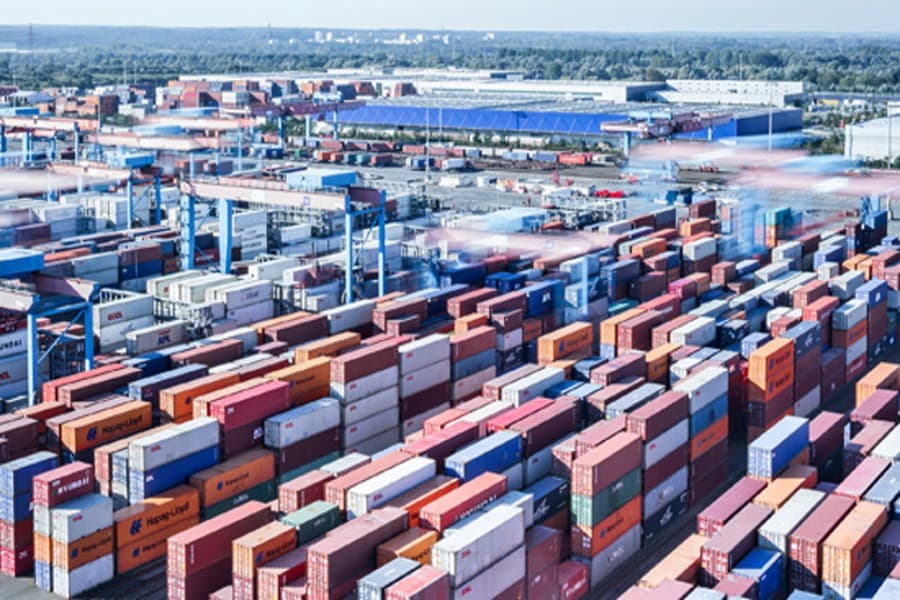
Chattogram, August 15, 2026 — Bangladesh's private inland container depot (ICD) network is expanding significantly, with four new facilities set to begin operation within a 20-km radius of Chattogram port. The new ICDs — with a combined capacity of approximately 22,000 twenty-foot equivalent units (TEUs) — will lift total private-depot capacity to about 128,000 TEUs, roughly 2.5 times Chattogram port's own container-handling capacity.
📦 The Four New ICDs
The four new private ICDs (also called off-docks) represent average investment of approximately Tk 5.0 billion each and are expected to employ roughly 1,200 people per depot. The facilities are:
- 🏭 AKK Container Terminal — at AK Khan Crossing
- 🏭 Eastern Logistics 02 — in Kattoli area near the marine drive
- 🏭 Karnaphuli Dry Dock Ltd — at Anwara, on the southern bank of the Karnaphuli river opposite Chattagram port
- 🏭 Shah Mojidia and Rahmania Container Depot — in the Patenga airport area
Each depot represents a substantial private investment in Bangladesh's logistics infrastructure — and their geographic distribution around Chattogram port creates an integrated logistics network that will reduce congestion at the port itself.
📊 Capacity Impact
The capacity expansion is significant for Bangladesh's export logistics:
- 📦 +22,000 TEUs — new capacity from the four ICDs
- 📦 128,000 TEUs total — private depot capacity after expansion
- 📦 2.5x port capacity — private depots exceed Chattogram port's own handling capacity
- 💰 Tk 20 billion investment — total private investment across the four facilities
- 👥 ~4,800 jobs — direct employment across the four depots
Almost all of Bangladesh's export containers already pass through private depots before reaching the port, while the facilities handle about 25 percent of import containers. The new ICDs will strengthen this critical logistics layer.
🚢 The Private Depot Model: How It Works
Private depots have been an important part of Bangladesh's export-logistics system since the late 1980s. The model operates as follows:
- 🏭 Factory to depot — exporters send cargo to private ICDs
- 📜 Customs supervision — containers stuffed under customs supervision at depot
- 🚢 Depot to port — sealed containers transported to Chattogram port
- 🚢 Port to vessel — containers loaded onto export vessels
- 📦 Space relief — keeps cargo-processing work outside the port
The system keeps much of the cargo-processing work outside the port, reducing pressure on its limited space. Industry officials argue that extending the model to a larger share of imports could have an even greater effect on congestion and vessel-turnaround times.
💼 BICDA: Strong Demand for New Capacity
Md Ruhul Amin Sikder, Secretary-General of the Bangladesh Inland Container Depots Association (BICDA), endorsed the expansion: “The new four will strengthen the capacity and these are broadly aligned with the government vision of turning the port city into a logistics hub.”
He indicated that the depots would have sufficient business as the government allows more import cargo to be handled by the facilities. “If all imports are given to the depots, the depots will not sit idle,” Sikder said, adding that several projects are awaiting approval while others are already operating.
🌏 Trade Volume Context
The ICD expansion comes as Bangladesh's trade volumes continue to grow:
- 💰 $48 billion merchandise exports — in the fiscal year just ended
- 💰 $71+ billion imports — in the latest fiscal year
- 📈 Export growth — RMG, pharmaceuticals, leather driving export expansion
- 📦 Import growth — raw materials and intermediate goods for export industries
- 🚢 Port throughput — Chattogram handles 90%+ of containerised trade
Imports supply raw materials and intermediate goods to export-oriented industries as well as finished products for the domestic market — making the ICD network critical not just for exports but for the entire manufacturing supply chain.
🏛️ Government's Logistics Hub Vision
The ICD expansion aligns with the government's plan to create an integrated logistics network linking the port with inland depots, roads, railways, warehouses, and other cargo facilities. Anwar-ul Alam Chowdhury, President of Bangladesh Chamber of Industries, said the private-depot model had worked well for the economy and that additional inland container facilities would strengthen the country's logistics capacity.
However, Amirul Haque, President of the Chittagong Chamber of Commerce and Industry (CCCI), cautioned that depots alone cannot turn Chattogram into a regional logistics hub. “The off-docks or dry ports are definitely part of the logistics hub, but we have to think beyond it to make it truly a regional logistics hub,” he said.
Haque emphasised the need for broader infrastructure investment:
- 🛣️ Roads — highway connectivity to and from Chattogram
- 🚆 Railways — freight rail to inland destinations
- 🚢 Port modernisation — terminal capacity and equipment
- 📦 Warehousing — modern storage and distribution facilities
- 💻 Digital tracking — end-to-end cargo visibility
A successful logistics hub, he noted, could contribute to economic growth, investment, and employment as the government seeks to expand its economy to a trillion-dollar one — almost double the present size.
💰 Investment Imperative: Beyond Private Capital
M. Masrur Reaz, Chairman and Chief Executive of Policy Exchange Bangladesh, emphasised that private depot investment alone is insufficient to achieve the government's logistics hub ambition. “Actually, the government needs to invest as well, side by side, to make the logistics hub,” he said.
Reaz estimated that such investment could run into billions of dollars and could generate substantial economic returns through improved trade efficiency, lower logistics costs, and stronger export competitiveness. Key government investment areas needed:
- 🛣️ Highway expansion — Dhaka-Chattogram corridor capacity
- 🚆 Rail freight — dual-gauge lines, container train services
- 🚢 Port infrastructure — Laldia terminal, Matarbari deep-sea port
- 💻 Digital systems — National Single Window, paperless customs
- 👥 Skill development — logistics workforce training
🌐 Strategic Context: Logistics as Export Competitiveness Lever
For Bangladesh's export economy — which shipped $48 billion in merchandise in the last fiscal year — logistics efficiency is a direct competitiveness variable. The World Bank's Logistics Performance Index consistently ranks Bangladesh below regional peers like Vietnam, Sri Lanka, and India — adding 30-40 percent to landed export costs compared to competitors.
The four new ICDs represent a meaningful step toward closing that gap — but they are only one piece of a larger puzzle. If paired with the broader infrastructure investments Reaz and Haque advocate — particularly port modernisation, rail freight, and digital systems — Bangladesh could materially improve its export competitiveness just as it prepares for LDC graduation and the intensifying global competition that will follow.
This news was originally published by The Financial Express. For the full original report, please visit: https://thefinancialexpress.com.bd/trade/four-new-icds-being-built-around-seaport
Related on BangladeshExport
📬 Get Bangladesh Trade News in your inbox
Weekly digest of export industry news, policy updates, and market analysis.
📰 Related Stories