China Trade Surplus Hits $687B as Global AI Tech Demand Drives Export Boom
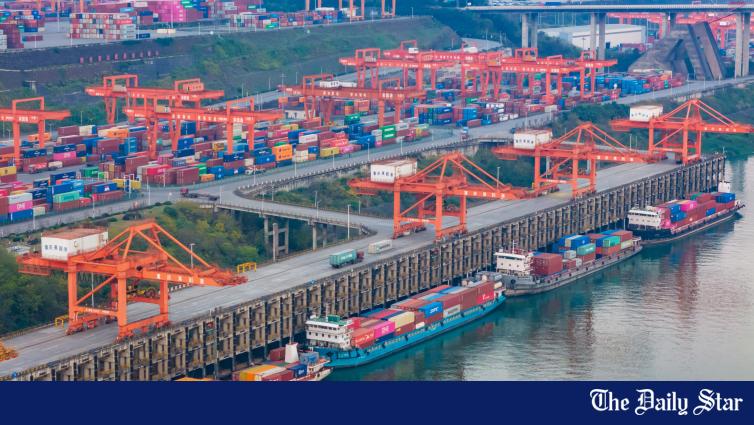
August 8, 2026 — China's trade surplus reached $687 billion through the end of July, putting the world's second-largest economy on pace to match last year's historic surplus of nearly $1.2 trillion — powered by surging global demand for data-processing equipment and green technology products as companies worldwide rush to build artificial intelligence capacity.
📊 July Export Performance
Exports climbed 23.9 percent year-on-year last month, the General Administration of Customs (GAC) reported, compared with a 23.0 percent forecast by Bloomberg. The export boom has been propelled further this year by increased demand for Chinese data-processing equipment and related components, as companies rush to build AI capacity. Overseas shipments of computers and related parts jumped 45.2 percent on year in the first seven months of 2026.
- 📈 July export growth: +23.9% YoY (vs 23.0% forecast)
- 📈 Computer/parts exports (Jan-Jul): +45.2% YoY
- 📈 July import growth: +27.5% YoY (vs 29.5% forecast)
- 📈 Trade surplus (through July): $687 billion
- 📈 2025 full-year surplus: ~$1.2 trillion (historic record)
- 📈 US surplus (through July): ~$171 billion
💬 "Soaring Global Demand for Electronics and Green Tech"
"Export and import values remain elevated, helped by soaring global demand for electronics and green tech products," wrote Julian Evans-Pritchard of Capital Economics. The data confirms that China's manufacturing sector — despite a prolonged slump in domestic consumption — has found a powerful external engine in the global AI build-out, with Chinese factories supplying the servers, chips, networking equipment, and data centre components that underpin the AI revolution.
"Export growth continued to support the economy in July," wrote Zhiwei Zhang, president and chief economist at Pinpoint Asset Management. "I expect intense negotiations between China and [its] major trading partners in coming months on what can be done to make trade more balanced."
🌏 Import Growth Slows from June Surge
Imports increased 27.5 percent in July, extending this year's strong performance even as main indicators of domestic demand have remained weak. However, that was slower than the 36 percent surge seen in June, and also missed a Bloomberg forecast of 29.5 percent growth. The slowdown suggests that while China's factories are buying raw materials and components to fuel the export boom, domestic consumer demand — the missing piece in China's economic recovery — remains subdued.
🇦🇺 US-China Trade: $171 Billion Surplus Despite Tensions
China's shipments to the United States rose 17 percent year-on-year last month, as the countries remain locked in a trade war despite efforts to ease tensions. That brought China's surplus with its superpower rival this year to nearly $171 billion through the end of July. The latest figures come days after a fresh flare-up in trade tensions between the world's top two economies.
Following sanctions imposed by Washington over forced labour and national security concerns, Beijing on Wednesday announced restrictions on drone exports to the United States and blacklisted six firms. China and the United States spent much of last year embroiled in an escalating trade war but reached a truce when US President Donald Trump met Xi in October. The relationship will undergo further scrutiny in coming weeks as officials prepare for a scheduled state visit by Xi to the United States in late September.
🇪🇺 European Concerns About Chinese Export Flood
The yawning trade gap has increasingly raised eyebrows abroad — particularly in Europe, where leaders worry about floods of Chinese exports squeezing out local manufacturers. Beijing has insisted it never deliberately pursued a trade surplus. The Communist Party's Politburo — the decision-making body headed by President Xi Jinping — urged a more "balanced" trade development at a key meeting late last month.
The European concern is particularly focused on the electric vehicle (EV) sector, where Chinese manufacturers — backed by years of state subsidies and battery technology investment — have built a cost advantage that European automakers struggle to match. The EU has already imposed provisional tariffs on Chinese EVs, and the trade surplus data will likely strengthen the case for making those tariffs permanent.
📈 AI Demand: The New Engine of Chinese Exports
The 45.2 percent surge in computer and related parts exports is the standout data point in the July trade figures. It reflects a fundamental shift in global technology demand: the AI revolution requires enormous physical infrastructure — servers, GPUs, networking switches, cooling systems, data centre power equipment — and China, as the world's largest electronics manufacturer, is capturing a disproportionate share of that demand.
Chinese companies like Lenovo, Huawei, ZTE, and dozens of smaller component manufacturers have positioned themselves as key suppliers in the global AI supply chain. Even as the US restricts advanced chip exports to China, Chinese manufacturers continue to supply the less advanced but equally necessary components — server chassis, networking equipment, power supplies, cooling systems — that make AI data centres possible.
🌏 Implications for Bangladesh and South Asian Trade
For Bangladesh, the Chinese trade surplus data carries both opportunities and risks. On the opportunity side, China's booming demand for raw materials — including cotton, of which Bangladesh is a significant importer via Chinese intermediaries — supports global commodity prices that affect Bangladeshi textile manufacturers. Additionally, China's focus on high-tech exports may gradually reduce its competitiveness in lower-value manufacturing, potentially opening space for Bangladeshi exporters in categories where China currently dominates.
On the risk side, the massive trade surplus increases the likelihood of further trade restrictions from the US and EU — restrictions that could disrupt global supply chains and increase costs for Bangladeshi manufacturers who depend on Chinese machinery, components, and raw materials. The ongoing US-China trade tensions also create currency volatility that can affect the taka's competitiveness against both the dollar and the yuan.
🏛️ Political Pressure on Beijing
The Politburo's call for "balanced" trade development reflects growing awareness in Beijing that the trade surplus is becoming politically unsustainable. A surplus of nearly $1.2 trillion inevitably generates protectionist responses from trading partners — responses that could ultimately harm Chinese exporters if they lead to broad tariff walls or supply chain decoupling.
The challenge for Beijing is that reducing the surplus would require either increasing imports (which depends on domestic demand recovery) or reducing exports (which would slow economic growth and employment). Neither option is politically attractive — suggesting that the surplus is likely to persist, along with the trade tensions it generates, for the foreseeable future.
✅ What to Watch
Three indicators will shape the trajectory of China's trade in coming months: (i) whether the AI-driven demand for Chinese tech exports sustains its current pace or begins to cool as the initial build-out phase matures; (ii) whether the Xi-Trump September summit produces any meaningful reduction in trade tensions or merely a temporary truce; and (iii) whether European trade policy hardens against Chinese exports in response to the widening surplus. For the global economy, China's trade data is a leading indicator of both technology investment trends and geopolitical risk — two forces that will shape market conditions for the remainder of 2026.
This news was originally published by The Daily Star. For the full original report, please visit: https://www.thedailystar.net/business/news/china-extends-trade-boom-global-ai-tech-demand-surges-4242701
📬 Get Bangladesh Trade News in your inbox
Weekly digest of export industry news, policy updates, and market analysis.
📰 Related Stories


✍️ More from System Administrator