Brent Crude Climbs 1.3% as Iran Reviews Hormuz Vessel Ban Bill: Oil Markets React
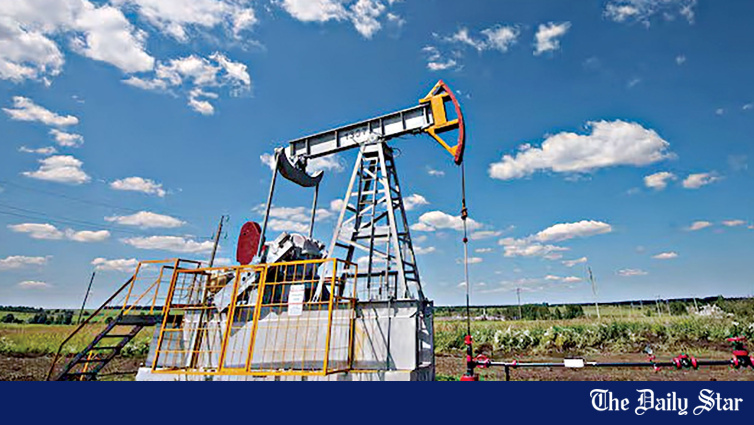
August 8, 2026 — Oil prices climbed more than $3 a barrel on Thursday as Iran reviewed a bill to ban US and Israeli vessels from the Strait of Hormuz — reigniting supply disruption fears in a market that has been on an emotional roller-coaster since the US-Iran conflict began in late February.
🛢️ Thursday's Price Settlement
Brent crude futures settled at $83.55 a barrel, gaining $1.06, or 1.3 percent. West Texas Intermediate (WTI) futures finished at $78.18 a barrel, up 89 cents, or 1.15 percent. The gains reversed some of the losses from earlier in the week, when a possible solution to the conflict looked more likely — part of an on-again, off-again pattern that has persisted since the US and Israel jointly struck Iran in late February, igniting a conflict that has now stretched into a sixth month.
- 📈 Brent crude: $83.55/barrel (+$1.06, +1.3%)
- 📈 WTI crude: $78.18/barrel (+$0.89, +1.15%)
- 📉 Brent weekly loss: More than 8%
- 📉 WTI weekly loss: More than 7%
- 📊 Gain on Thursday: More than $3/barrel
⚠️ Iran's Hormuz Vessel Ban Bill
The price spike was triggered by news that Iran is reviewing a bill to ban US and Israeli vessels from the Strait of Hormuz — the narrow waterway through which roughly a fifth of the world's oil and liquefied natural gas normally passed before the war began. The bill, if enacted, would represent a significant escalation in the conflict and could effectively cut off a major supply route for energy exports to the United States and its allies.
The move comes despite earlier signals that an Iran-Oman agreement on the strait's shipping route was close to being finalised. Both Iran and Oman are said to have agreed on the route ships would take through the strait, which lies between their two countries — but it remains unclear whether the United States will agree to these terms.
💬 Market Analysis: "Market Remains in the Dark"
"While this week's signals on a potential deal have sent a roller-coaster ride in market sentiment, the market remains in the dark as to what needs to happen for the agreement to be clinched," said Vandana Hari, founder of oil market analysis provider Vanda Insights.
"The market is trying to assess if an Iran-Oman agreement would allow a US-flagged vessel to transit the Strait of Hormuz," said Andrew Lipow, president of Lipow Oil Associates. "Would it allow a US-owned vessel to go through? Would it allow a vessel headed for a US port to go through?"
These questions highlight the fundamental ambiguity at the heart of the proposed Iran-Oman deal — an ambiguity that traders are pricing into every barrel of oil bought and sold.
💰 The Fee Dispute: 5-7% vs 3% vs 0%
A significant point of contention in the negotiations is the question of transit fees. Iran is seeking fees of between 5 percent and 7 percent of the price of cargoes from ships using the strait, according to a senior Iranian official. Oman, meanwhile, is discussing fees of about 3 percent, while Washington wants no fees at all.
- 🇮🇷 Iran demands: 5-7% of cargo value
- 🇲🇲 Oman proposes: ~3% of cargo value
- 🇺🇸 US position: 0% (no fees)
The fee gap is substantial and reflects the deeper geopolitical tension: Iran wants to extract economic benefit and strategic leverage from its control of the strait, while the US regards any payment as legitimising Iran's claim over an international waterway.
🛡️ Structural Obstacles to the Deal
Four industry sources have said the proposed deal is not easily workable because of US sanctions and restrictive insurance clauses on any payments. Even if the political will existed on all sides to reach an agreement, the legal and financial infrastructure needed to implement it — payment clearing, insurance coverage, sanctions compliance — would be extraordinarily complex to set up.
"The structure of the Iran-Oman agreement in its current form and the power it yields to Iran is nothing that [US President Donald] Trump can accept politically," said Bjarne Schieldrop at SEB Research. "Trump would face heavy political criticism at home if he did."
🌏 Strategic Reserves Being Draw Down
"The longer the supply disruption goes, the longer the world's commercial reserves are being drawn down," said one analyst — highlighting a growing structural concern beneath the day-to-day price volatility. As commercial reserves deplete, the market becomes increasingly vulnerable to any further supply shock, potentially amplifying price swings in either direction.
💬 "We Need That Strait Reopened Fully"
"We need that strait to be reopened fully," said John Kilduff, partner with Again Capital. "The continued uncertainty about the outcome of the war and the timing of its end keeps traders very anxious."
Kilduff's assessment captures the fundamental challenge facing oil markets: partial solutions and interim arrangements are insufficient. The market needs certainty — and until the strait is fully reopened with clear, enforceable rules that all parties accept, prices will remain volatile and risk premiums will remain elevated.
📈 Weekly Performance: Losses Despite Thursday's Gain
Despite Thursday's gain, Brent was on course for a weekly loss of more than 8 percent, while WTI lost more than 7 percent over the same period. The weekly losses reflect the market's earlier optimism about a potential deal — optimism that was dashed by Iran's move to review the vessel ban bill. This whipsaw pattern has been a hallmark of the market since the conflict began, with prices swinging sharply on every diplomatic signal, rumour, and counter-signal.
🌏 Implications for Bangladesh
For Bangladesh, the oil price volatility has direct implications for the country's import bill and inflation outlook. Bangladesh imports all of its crude oil and refined petroleum products, with the annual import bill typically ranging from $5 billion to $8 billion depending on prices. Every $10 per barrel change in oil prices, sustained over a year, translates into approximately $1 billion in additional or reduced import costs — with corresponding impact on the current account deficit, the taka-dollar exchange rate, and domestic energy inflation.
The Bangladesh government's August 6 approval for direct purchase of eight LNG cargoes — combined with the partial FSRU resumption and the broader gas crisis management efforts — takes on added significance in this context. Higher oil prices increase the cost of LNG spot cargoes (which are often priced relative to oil), making the gas crisis even more expensive to manage. Conversely, any diplomatic breakthrough that reopens the Strait of Hormuz would ease both oil and LNG prices — providing meaningful relief to Bangladesh's energy import bill and broader macroeconomic stability.
✅ What to Watch
Three indicators will determine the near-term direction of oil prices: (i) whether Iran's parliament passes the vessel ban bill and what enforcement mechanism it includes; (ii) whether the US responds with diplomatic countermeasures or military posturing; and (iii) whether the Iran-Oman agreement on the shipping route can overcome the fee dispute and sanctions/insurance obstacles. For now, the market remains in a state of anxious uncertainty — pricing in risk premiums that could unwind rapidly if a comprehensive deal is reached, or escalate further if the conflict intensifies.
This news was originally published by The Daily Star. For the full original report, please visit: https://www.thedailystar.net/business/news/brent-climbs-1-uncertainty-over-end-iran-war-4242706
📬 Get Bangladesh Trade News in your inbox
Weekly digest of export industry news, policy updates, and market analysis.
📰 Related Stories



✍️ More from System Administrator