Bangladesh Plans $2 Billion Equity Fund in Hong Kong to Diversify Financing
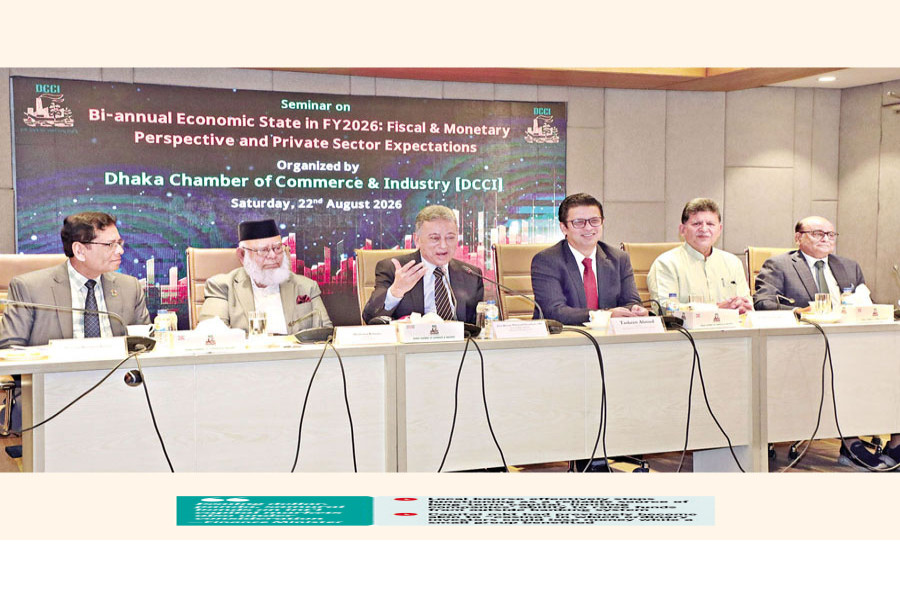
Dhaka, August 22, 2026 — Bangladesh plans to launch a $2.0 billion fund in Hong Kong for equity investment in the country's businesses and projects to diversify financing and reduce reliance on conventional borrowing. Finance and Planning Minister Amir Khosru Mahmud Chowdhury unveiled the plan on 22 August 2026 at a seminar organised by the Dhaka Chamber of Commerce and Industry (DCCI) in Dhaka.
The proposed Bangladesh-dedicated fund would provide equity rather than loans, meaning it would not create a direct debt obligation for the government. "We are going to have a dedicated fund for Bangladesh in Hong Kong. It will be a $2.0 billion worth of Bangladesh-dedicated fund. This is equity and not a loan," Khosru said at the seminar titled "Biannual Economic State in FY2026: Fiscal & Monetary Perspective and Private-Sector Expectations".
📊 The Plan
- 💰 Fund size: $2.0 billion
- 🌐 Location: Hong Kong
- 💼 Type: Equity investment (not a loan — no debt obligation)
- 🌐 Purpose: Equity investment in Bangladesh's businesses and projects
- 🏢 Objective: Diversify financing, reduce reliance on bank borrowing
- 📜 Also planned: Dollar bonds, panda bonds, samurai bonds
📜 International Capital Market Access
Khosru said Bangladesh was also considering issuing dollar, panda, and samurai bonds to tap different international capital markets. "We want to go for dollar bonds. We will go for panda bonds and samurai bonds," he said. The government has already reduced its reliance on bank borrowing to some extent, but the shift would take time.
"We have already brought down bank borrowing somewhat. But, the process will take time. We are moving in that direction," he told the business audience. The finance minister said reviving Bangladesh's capital market is central to the government's strategy to develop alternative sources of finance. He said the market has effectively stopped functioning as a reliable source of long-term capital for an extended period, limiting companies' ability to raise funds outside the banking system.
🏢 Capital Market Reform
"As there was virtually no functioning capital market in Bangladesh for quite some time, we are trying to revive it as one of the alternative sources of financing," Khosru said. The government has overhauled the regulatory leadership of the Bangladesh Securities and Exchange Commission (BSEC), appointing a chairman and four commissioners through what Khosru described as a transparent selection process.
"I won't say that the capital market has recovered completely, but confidence is coming back. The market is gaining ground and moving upward," he said. He stressed that restoring investor confidence alone would not be sufficient — companies must also believe that the market is credible enough to raise capital through listings. "Good companies will come for listing only when they have confidence in the market."
Khosru criticised the previous state of the market, saying it had become akin to a "casino" in which ordinary investors could lose money while a small group of participants benefited. The government was seeking to replace that culture with greater transparency, professionalism, and institutional governance.
🌐 Strategic Context for Bangladesh's Export Economy
The $2 billion Hong Kong equity fund represents a significant innovation in Bangladesh's approach to development financing. For the export economy, the availability of equity financing (rather than debt) could support the kind of long-term investment in export-oriented manufacturing capacity that has been constrained by the banking sector's NPL crisis and the government's limited fiscal space. Equity investors take on risk alongside the businesses they invest in, meaning the financing does not add to the debt burden that has been identified as a major constraint by the CPD and other analysts.
The plan also aligns with the government's broader strategy of reducing reliance on domestic bank borrowing, which crowds out private-sector credit (currently at an all-time low of 4.5% growth). By tapping international capital markets through dollar, panda, and samurai bonds, the government can access a much larger pool of capital than the domestic banking system can provide — at potentially lower costs, given the depth and liquidity of international bond markets. However, the success of this strategy will depend on Bangladesh's ability to maintain macroeconomic stability, meet international disclosure and governance standards, and demonstrate that the capital raised will be invested productively rather than consumed by the fiscal deficit. The BNP government's five-year strategic framework, the Invest Bangladesh Authority formation, and the broader reform agenda all need to align with this financing strategy to ensure that the $2 billion fund and the planned bond issuances translate into real investment in the manufacturing and infrastructure capacity that Bangladesh's export economy needs for its post-LDC transformation.
This news was originally published by The Financial Express. For the full original report, please visit: https://thefinancialexpress.com.bd/economy/govt-plans-launching-20b-equity-fund-in-hong-kong
Related on BangladeshExport
📬 Get Bangladesh Trade News in your inbox
Weekly digest of export industry news, policy updates, and market analysis.
📰 Related Stories