Bangladesh And IMF To Work Out Loan Proposal Details Over Next Two Weeks: Finance Minister Khosru
Finance Minister says "in principle, everything is fine" after Bangkok meeting; two teams to sit together to discuss closing the deal.
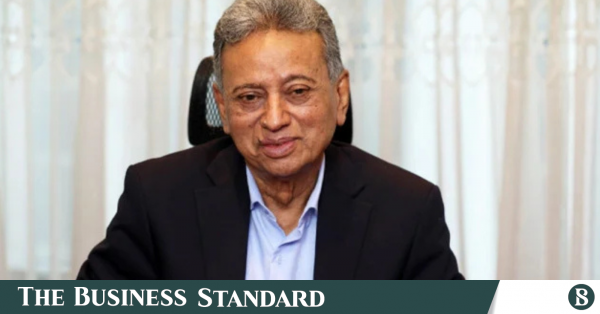
💰 Finance Minister Amir Khosru Mahmud Chowdhury has said Bangladesh and the International Monetary Fund (IMF) will hold further discussions for two weeks from next week to work out the details of the country''s loan proposal, with the aim of finalising the outstanding issues. "In principle, everything is fine. Now, the two teams will sit together to discuss how to close the deal," he said after a meeting with the IMF in Bangkok on 16 October 2026.
📊 The meeting focused on the final review of a proposal submitted by Bangladesh to the IMF, the minister said. The comments come as the Bangladesh delegation, led by Khosru, engages with the IMF and other multilateral partners on the sidelines of the 2026 IMF-World Bank Group Annual Meetings in Bangkok, Thailand, which are taking place from 12 to 18 October.
🏛 Multilateral partners keen to support Bangladesh
All multilateral organisations are working closely with Bangladesh, Khosru said, adding that all multilateral and bilateral partners, including the World Bank, IMF, Asian Development Bank (ADB) and Japan International Cooperation Agency (JICA), are keen to support the country. The coming year is very important for Bangladesh and development partners share that view, the minister stated.
The finance minister''s comments about the breadth of multilateral support are significant because they signal that Bangladesh''s engagement with the international financial community extends well beyond the IMF loan programme. The World Bank''s recent approval of the Tk 1,276 crore Financial Sector Support Project-II, the ADB''s $50 million loan for Modern Syntex''s polyester chips expansion, and ongoing JICA support for various infrastructure projects all demonstrate the depth of multilateral engagement with Bangladesh.
🤝 World Bank Country Partnership Framework proposal
Dhaka has proposed signing a Country Partnership Framework with the World Bank, Khosru said. The government has drawn up a development framework for the next five years, the minister said. A Country Partnership Framework (CPF) is the World Bank''s main instrument for organising its engagement with a member country, typically covering a 4-6 year period and aligning World Bank Group support with the country''s own development priorities.
For Bangladesh, a new CPF would replace the existing framework and could significantly expand World Bank financing for the country''s development priorities. The World Bank has historically been one of Bangladesh''s largest development partners, providing concessional financing through the International Development Association (IDA) for projects in infrastructure, education, health, social protection, and economic governance. A new CPF would likely focus on the country''s post-LDC graduation agenda, climate resilience, and the structural reforms needed to sustain growth in the medium term.
👥 What the IMF loan discussions cover
The IMF loan discussions, as outlined in related reporting from the Bangkok meetings, centre on a proposed $4.5 billion programme in quarterly instalments from December 2026 through December 2029. The IMF has identified revenue mobilisation, banking sector reform, monetary policy tightening, and macroeconomic stability as the key priorities for the new programme. Bangladesh''s revenue-to-GDP ratio has fallen to 7% — among the lowest in the world — while non-performing loans in the banking sector have climbed to around 33%.
The finance minister''s statement that "in principle, everything is fine" suggests that the high-level political understanding between Bangladesh and the IMF is in place. The two-week detailed negotiation period that Khosru referenced will focus on the technical specifics: the exact loan amount, the number of tranches, the specific reform conditions, the implementation timeline, and the monitoring framework. Staff-level negotiations typically involve detailed technical discussions between IMF economists and Bangladeshi officials from the Finance Division, Bangladesh Bank, NBR, and other relevant agencies.
🌏 Five-year development framework
The minister''s reference to a five-year development framework is significant because it suggests that the government is putting together a coherent medium-term plan that will guide its engagement with development partners. Bangladesh''s traditional five-year planning cycle has been supplemented in recent years by longer-term vision documents, but a clear five-year framework aligned with multilateral partner support could provide greater coherence to the country''s development agenda.
For development partners like the World Bank, ADB, JICA, and the IMF, a five-year framework provides the predictability needed to plan their own lending programmes. Multilateral lenders typically work on multi-year cycles, and having a clear country-owned framework helps them align their support with the government''s priorities. The framework could also help Bangladesh coordinate the various reform initiatives that are currently underway — including revenue mobilisation, banking sector reform, energy sector restructuring, and trade facilitation improvements.
💰 Strategic significance for Bangladesh
The Bangkok meetings and the proposed IMF programme come at a critical moment for Bangladesh''s macroeconomic stability. The country has been navigating multiple challenges — including weak private sector credit growth, elevated inflation, pressure on foreign exchange reserves, and banking sector stress — that have created an urgent need for both external financing and structural reform. The IMF programme would provide critical external support while the associated reform conditions would help address the structural weaknesses.
The fact that the finance minister is publicly optimistic about the IMF engagement suggests that the government is confident about its ability to meet the programme''s conditions. This represents a shift from the previous Awami League government''s experience with the IMF, where the $5.5 billion programme was scrapped after multiple reform commitments went unmet. The current government appears to be taking a more disciplined approach to IMF engagement, with Khosru emphasising that some reform issues have already been addressed.
🤝 What to watch in the coming weeks
The next two weeks will be critical for the IMF programme. The staff-level discussions that Khosru referenced will determine the specific shape of the programme — including the loan amount, tranche schedule, reform conditions, and implementation timeline. If the discussions are successful, a staff-level agreement could be reached by early November 2026, with IMF Board approval and first disbursement following in subsequent weeks.
For Bangladesh''s broader macroeconomic outlook, the IMF programme would provide a critical anchor for stabilisation efforts. The reform conditions — particularly on revenue mobilisation and banking sector supervision — would address the structural weaknesses that have held back the country''s economic performance. And the financing itself would help ease pressure on foreign exchange reserves and support the government''s development spending.
The coming year, as Khosru noted, will indeed be very important for Bangladesh. The IMF programme, if successfully negotiated and implemented, could mark a turning point in the country''s macroeconomic trajectory — providing the financing and reform momentum needed to navigate the challenges of LDC graduation, global commodity price volatility, and the broader structural transformation of the economy.
This news was originally published by The Business Standard. For the full original report, please visit: https://www.tbsnews.net/economy/bangladesh-imf-work-out-details-loan-proposal-over-next-two-weeks-khosru-1574551
Related on BangladeshExport
📬 Get Bangladesh Trade News in your inbox
Weekly digest of export industry news, policy updates, and market analysis.
📰 Related Stories