Bangladesh Seeks $4.5 Billion IMF Loan In 6 Instalments Through December 2029
Finance Minister Amir Khosru Mahmud Chowdhury signals year-end agreement target after fruitful Bangkok talks with IMF Deputy Managing Director Nigel Clarke.
💰 Bangladesh is seeking a $4.5 billion loan from the International Monetary Fund (IMF) in quarterly instalments from December this year through December 2029, with an agreement expected by year-end, a Bangladesh delegation official said on the sidelines of the 2026 IMF-World Bank Group Annual Meetings in Bangkok. The loan amount and conditions are expected to be finalised during staff-level negotiations after an IMF mission visits Bangladesh later this month, the official told The Business Standard on condition of anonymity.
📊 Senior officials of the Bangladesh delegation accompanying Finance Minister Amir Khosru Mahmud Chowdhury expressed optimism about the timeline following what they described as "fruitful discussions" with IMF Deputy Managing Director Nigel Clarke in Bangkok, Thailand, on the sidelines of the annual meetings. The deal, if finalised, would mark a fresh engagement between Bangladesh and the IMF after the previous $5.5 billion programme was scrapped by the current government earlier this year.
🏛 What the new IMF programme will look like
Prime Minister''s Economic Affairs Adviser Rashed Al Mahmud Titumir did not directly confirm the proposed loan amount or number of instalments, saying these would be determined during staff-level negotiations and at an IMF board meeting. He said Bangladesh must implement its reform initiatives by 2029, ahead of the 2030 national election, when the government would have to seek a public mandate — a comment that ties the IMF reform timeline to the political calendar.
Finance Minister Amir Khosru Mahmud Chowdhury also said the new IMF programme would come with conditions that Bangladesh would have to fulfil, although some issues could be resolved through discussions and mutual agreement. Speaking to reporters after meeting Clarke in Bangkok, he said discussions on the proposed programme were progressing positively. Further talks would determine the conditions and how they would be met, he added.
👥 IMF priorities: revenue mobilisation and banking reform
The IMF is prioritising increased revenue mobilisation and financial sector reforms in discussions on the proposed loan, which could range from $4.5 billion to $5 billion, according to Sonali Jain-Chandra, deputy director of the IMF''s Asia and Pacific Department. At a press conference on the Asia-Pacific region, Jain-Chandra said Bangladesh''s revenue-to-GDP ratio had fallen to 7%, placing it among the lowest in the world.
She said higher revenue collection was necessary to restore financial sector stability and finance development activities. The IMF also stressed the need for strategic measures to address major problems in the banking sector, maintain a contractionary monetary policy until high inflation comes under control, and implement reforms on schedule. Khosru said the IMF had raised concerns about the banking sector, the tax-to-GDP ratio, bank recapitalisation and macroeconomic stability — Bangladesh agreed with the IMF''s observations on these issues, and many had already been addressed, he added.
💰 Why Bangladesh needs the IMF programme
The proposed $4.5 billion loan comes at a critical moment for Bangladesh''s macroeconomic stability. The country has been grappling with multiple challenges: weak private sector credit growth stuck below 5% for six straight months, elevated inflation at 8.26% in August 2026, pressure on foreign exchange reserves, and significant banking sector stress with non-performing loans at around 33%.
The IMF financing would provide critical external support for the country''s macroeconomic stabilisation programme, while the associated reform conditions would help address structural weaknesses in revenue mobilisation, banking supervision, and monetary policy transmission. The IMF''s emphasis on revenue mobilisation reflects Bangladesh''s persistent fiscal challenge: the country''s 7% revenue-to-GDP ratio is among the lowest in the world, constraining the government''s ability to finance development spending without excessive bank borrowing.
🤝 Banking sector reform commitments
Bangladesh presented plans for banking sector reforms during the discussions, including measures to restore depositor confidence and reduce non-performing loans (NPLs), a Bangladesh Bank delegation official said. Depositors of troubled Sammilito Islami Bank are already receiving repayments, while National Bank began returning deposits on 15 October 2026 as the government seeks to rebuild confidence in distressed banks through regular repayments.
The delegation is also preparing a strategy to reduce bad loans across the banking sector. Under an IMF loan agreement signed in 2023 during the previous Awami League government, Bangladesh committed to reducing the NPL ratio to 10% by 2026. Instead, the ratio has climbed to around 33% — a stark indicator of how badly the previous reform commitments went off track. The target for NPL reduction under the proposed new programme has yet to be determined, the official said.
🌏 Bangladesh''s broader economic context
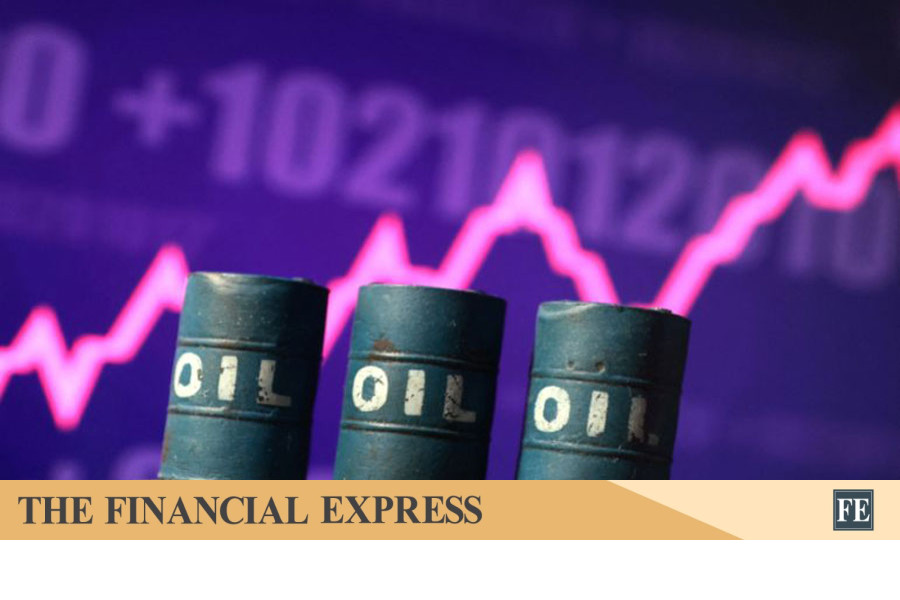
The IMF engagement also comes as Bangladesh navigates a complex set of external shocks. The Middle East crisis has elevated international oil prices to around $110 per barrel, putting pressure on the country''s fuel import bill and foreign exchange reserves. The QatarEnergy LNG supply disruption has further complicated the country''s energy security situation. The broader global economic environment — characterised by geopolitical uncertainty, elevated commodity prices, and slower global growth — is creating headwinds for Bangladesh''s export-oriented economy.
Despite these challenges, Khosru said the IMF is satisfied with Bangladesh''s recent economic progress following the budget, despite global challenges, including the war in the Middle East. This positive assessment should support the staff-level negotiations when the IMF mission visits Bangladesh later this month.
💰 What happens next
The coming weeks will be critical for Bangladesh''s engagement with the IMF. The staff-level mission visit, expected later in October 2026, will determine the specific loan amount, the number of instalments, the conditions attached to the programme, and the timeline for implementation. If negotiations proceed smoothly, the agreement could be signed by December 2026, with the first disbursement following shortly thereafter.
For Bangladesh, the IMF programme is more than just financing — it is a signal to international investors, credit rating agencies, and development partners that the country is committed to serious macroeconomic reform. The previous programme''s failure — with NPLs rising to 33% against a 10% target — damaged Bangladesh''s credibility with the IMF. The new programme will need to demonstrate that the current government has both the political will and the technical capacity to implement the agreed reforms.
The 2026 IMF-World Bank Group Annual Meetings began in Bangkok on 12 October and will continue until 18 October, bringing together finance ministers, central bank governors, policymakers and representatives of development partner organisations. The Bangladesh delegation''s presence at the meetings, led by Finance Minister Khosru, signals the government''s commitment to engaging with the international financial community as it seeks to navigate the country''s macroeconomic challenges.
The coming months will show whether Bangladesh can convert the positive momentum from Bangkok into a concrete IMF agreement — and whether the resulting programme can deliver the structural reforms needed to put the country''s economy on a more sustainable footing. The stakes are high: a successful IMF programme would provide critical financing and reform momentum, while a failed programme would leave Bangladesh exposed to macroeconomic risks without the external support needed to address them.
This news was originally published by The Business Standard. For the full original report, please visit: https://www.tbsnews.net/economy/bangladesh-seeks-45b-imf-loan-6-instalments-through-2029-1574386
Related on BangladeshExport
📬 Get Bangladesh Trade News in your inbox
Weekly digest of export industry news, policy updates, and market analysis.
📰 Related Stories