Bangladesh Should Receive Increased US Support Amid Rising Imports: Finance Minister Khosru
Finance Minister cites aircraft, oil, soybean imports from US; pushes for shift from loans to foreign direct investment and joint investment.
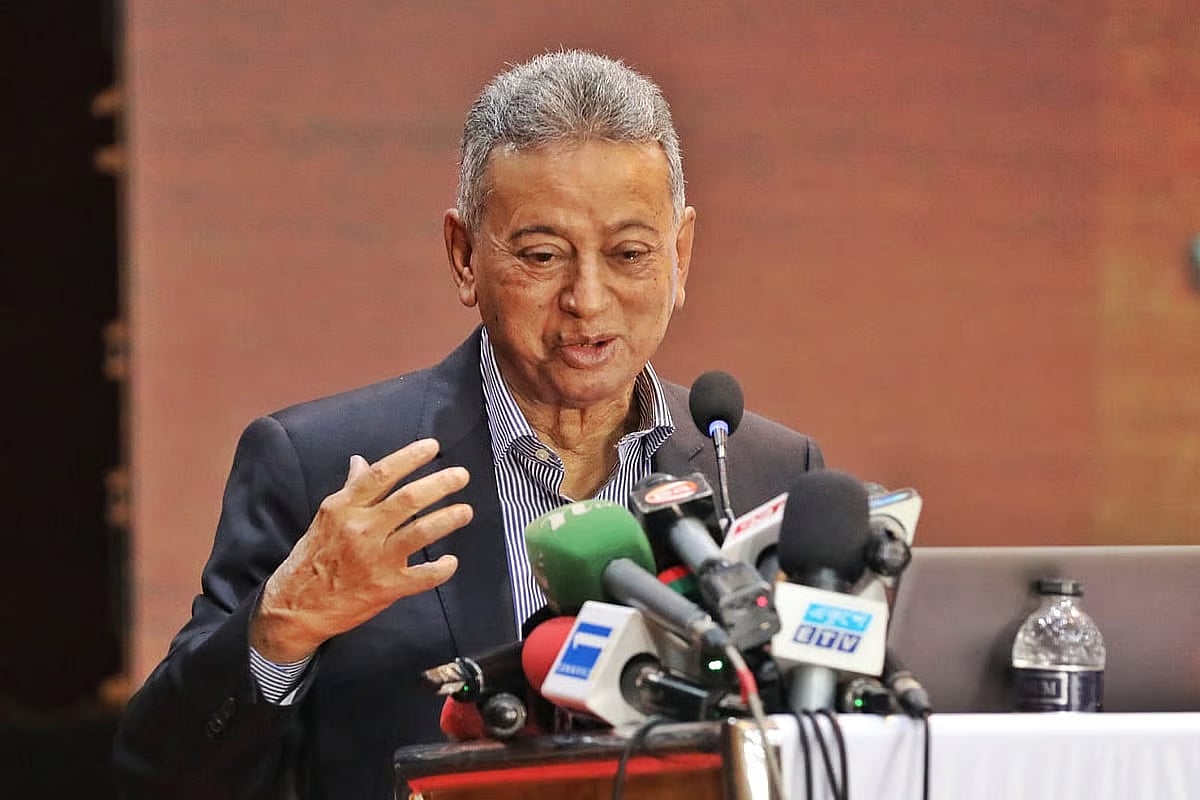
🌏 Finance Minister Amir Khosru Mahmud Chowdhury today, Saturday, said Bangladesh should receive increased support from the United States in view of improving bilateral relations and the country''s growing imports from the US. He made the remarks while briefing journalists after a meeting with officials of the US Treasury Department in Washington. The meeting discussed debt management, US assistance and overall Bangladesh-US relations, the minister said. He also held discussions with representatives of the US Export-Import Bank (EXIM Bank) and other US agencies involved in providing assistance.
📊 "Bangladesh did not receive much from the United States in the past. But, as Bangladesh-US relations have progressed, we are purchasing several aircraft and importing oil, soybeans and various other products and commodities from the US. Therefore, we should receive additional support from them. They agreed on this. Now, let us see," Amir Khosru said. The finance minister said the government''s economic policy prioritises reducing dependence on loans and increasing foreign direct investment (FDI) and joint investment.
🏛 Shift from loans to investment
Khosru said he had held extensive discussions with the US EXIM Bank on the issue and expressed hope that Bangladesh could move forward with this approach. "The main focus of our economic policy is investment. We want to move away from loans and focus more on direct investment and joint investment," he said. The shift from loan-dependent financing to investment-driven growth represents a significant reorientation of Bangladesh''s economic strategy — and one that could have important implications for the country''s long-term development trajectory.
Historically, Bangladesh has relied heavily on concessional loans from multilateral development partners like the World Bank, ADB, and JICA to finance its development priorities. While these loans have supported critical infrastructure investments, they have also contributed to a growing external debt burden. The finance minister''s emphasis on FDI and joint investment reflects a recognition that Bangladesh needs to mobilise more private capital — both domestic and foreign — to sustain its growth momentum.
👥 Bangladesh-US bilateral trade context
Highlighting Bangladesh''s substantial imports from the United States, the minister said purchases of aircraft, oil, soybeans and other commodities had implications for bilateral trade as well as Bangladesh''s external balance of payments. "We have strongly told them that Bangladesh is importing so much from the United States, and bilateral relations have reached their current stage. If support does not come from the US now, when will it come? The assistance we expect should come now," he said.
The aircraft purchases referenced by the finance minister include the recent agreement to acquire 10 Airbus aircraft for Biman Bangladesh Airlines, plus additional Boeing jets under supplementary agreements worth $2.7 billion. The oil imports reflect Bangladesh''s growing fuel import bill — which has been elevated by the West Asia crisis and the closure of the Strait of Hormuz. The soybean imports support the country''s edible oil and animal feed industries, which are critical for food security.
💰 US EXIM Bank engagement
The finance minister''s discussions with the US Export-Import Bank (EXIM Bank) are particularly significant. The US EXIM Bank is the official export credit agency of the United States, providing financing to support US exports to foreign buyers. Its engagement with Bangladesh could support US exports of aircraft, energy equipment, agricultural commodities, and other products — while providing Bangladesh with longer-tenor financing at competitive rates.
For Bangladesh, the US EXIM Bank financing could complement the country''s other sources of external financing. The country is currently in negotiations with the IMF for a $4.5 billion loan programme, and is also engaged with the World Bank on a Country Partnership Framework. Adding US EXIM Bank financing to this mix would diversify Bangladesh''s sources of external support and reduce dependence on any single development partner.
🌏 Strategic significance for Bangladesh-US relations
The finance minister''s push for increased US support comes at a moment when Bangladesh-US relations have been improving. The two countries have been working more closely on economic, security, and regional issues — and the growing volume of bilateral trade reflects this improving relationship. The fact that Bangladesh is now a significant customer for US aircraft, energy products, and agricultural commodities gives the country greater leverage in seeking reciprocal US support.
For Bangladesh''s broader economic strategy, the emphasis on FDI and joint investment aligns with the country''s ambition to attract more foreign capital into its manufacturing, infrastructure, and technology sectors. The government has identified several priority sectors for FDI — including energy, telecommunications, pharmaceuticals, and ICT — and US investors could play a significant role in these sectors.
🤝 Looking ahead
Amir Khosru said the relevant US parties agreed with Bangladesh''s position. However, he added, the extent and modalities of the expected assistance would become clear in the coming days. The coming weeks will therefore be critical for translating the positive diplomatic engagement into concrete financing commitments.
For Bangladesh''s broader economic agenda, the push for increased US support reflects a pragmatic recognition that the country needs to diversify its sources of external financing while also attracting more private capital. The combination of IMF programme support, World Bank Country Partnership Framework, ADB and JICA engagement, and potential US EXIM Bank financing could provide Bangladesh with a robust external financing package to support its development priorities over the medium term.
The shift from loans to investment — as articulated by the finance minister — is a positive signal that Bangladesh is thinking strategically about its long-term development financing model. If successful, this approach could help the country build a more sustainable growth trajectory that relies less on debt and more on private capital flows that bring technology, expertise, and market access along with financing.
This news was originally published by Prothom Alo English. For the full original report, please visit: https://en.prothomalo.com/business/local/efpu38cl6l
Related on BangladeshExport
📬 Get Bangladesh Trade News in your inbox
Weekly digest of export industry news, policy updates, and market analysis.
📰 Related Stories