Why Bangladesh is Becoming Asia's Fastest Growing Manufacturing Hub
Discover why Bangladesh is Asia's fastest growing manufacturing hub — economic growth, export statistics, infrastructure investment, skilled workforce, competitive pricing, and future investment opportunities.
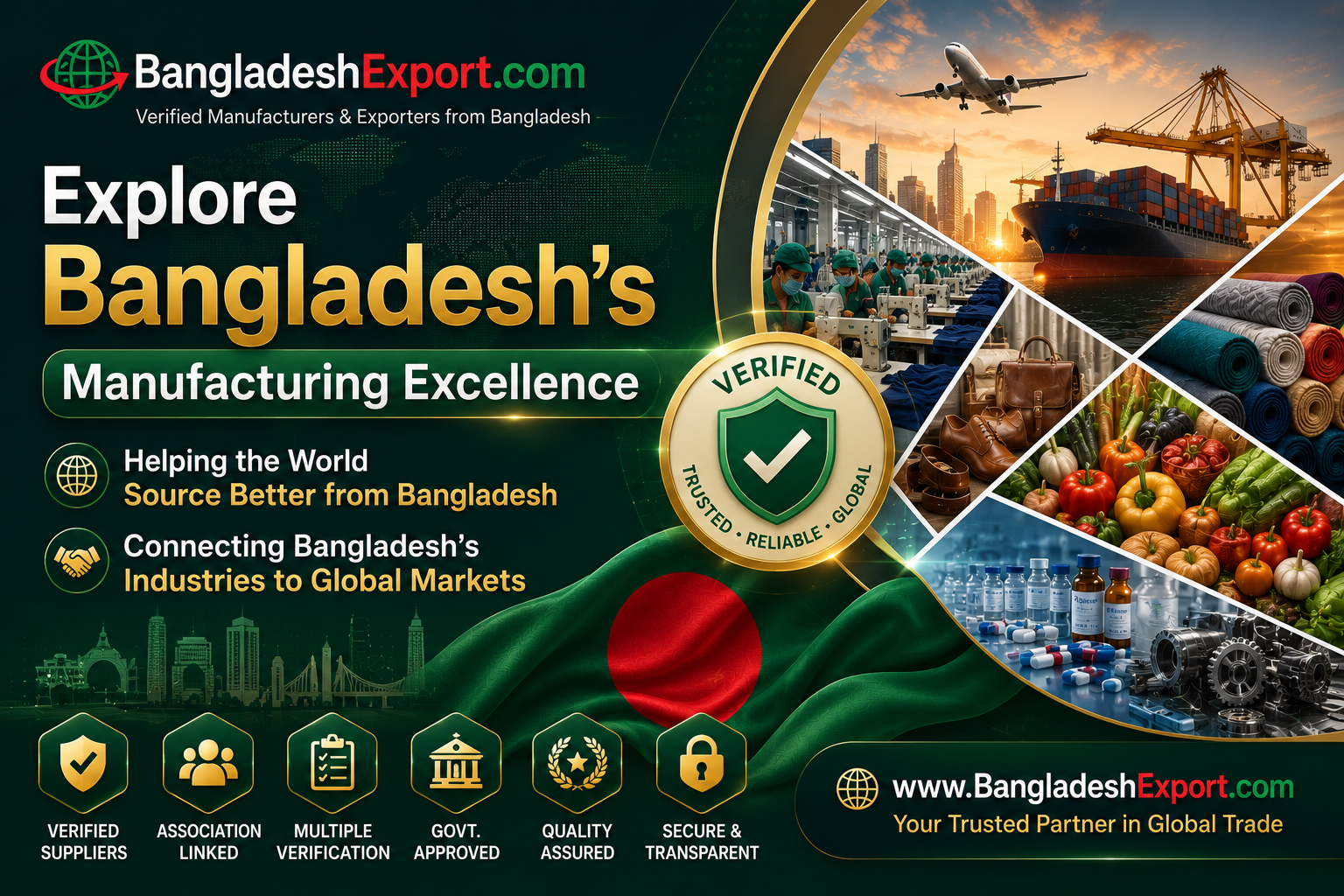
Bangladesh has quietly become one of Asia's most compelling manufacturing success stories. With $48 billion in exports in FY2025-26, 6-7% annual GDP growth, and massive infrastructure investment, the country is positioning itself as the next great manufacturing hub — and global buyers are taking notice.
Table of Contents
- Economic Growth Trajectory
- Export Statistics and Trends
- Infrastructure Development
- Skilled Workforce
- Competitive Pricing Advantage
- Future Investment Opportunities
- AI and Smart Manufacturing
- Frequently Asked Questions
Economic Growth Trajectory
Bangladesh has maintained 6-7% annual GDP growth for over a decade, making it one of the world's fastest-growing economies. Key milestones:
- 2026 GDP: approximately $450 billion
- Per capita income: $2,800+ (graduated from LDC status expected 2026)
- Poverty rate: dropped from 44% (2000) to 18% (2026)
- Export target: $80+ billion by 2027
Export Statistics and Trends
Bangladesh's export growth has been remarkable:
- FY2025-26: $48.00 billion (slight 0.58% decline due to global headwinds)
- June 2026: $4.42 billion — 25.91% YoY surge signaling recovery
- RMG: $38.70 billion (80% of exports)
- Leather: $1.22 billion
- Jute: $884 million (7.75% recovery)
- Pharmaceuticals: $1.30+ billion
- IT services: $2+ billion (fastest growing)
View detailed export statistics →
Infrastructure Development
Bangladesh is investing heavily in infrastructure to support manufacturing growth:
- Padma Bridge — $3.6 billion mega-project connecting southwest Bangladesh
- Deep Sea Port (Matarbari) — enabling larger container ships
- Economic Zones — 100+ new zones under development
- Power generation — 25,000+ MW capacity (was 5,000 MW in 2010)
- Dhaka Metro Rail — urban transport improvement
- Chittagong Port expansion — increased container handling capacity
Skilled Workforce
Bangladesh's workforce is its strongest asset:
- 170 million population — large labor pool
- 4 million+ garment workers — experienced in manufacturing
- 500,000+ IT professionals — software and services
- English proficiency — medium to high, improving annually
- Competitive wages — $95-120/month minimum for garment workers
- Female participation — 60% of garment workers are women
Competitive Pricing Advantage
Bangladesh offers significant cost advantages:
- Garment manufacturing: 15-30% cheaper than China
- IT services: $20-40/hour vs $80-150 in US/EU
- EU duty-free access: 12%+ advantage over non-LDC competitors
- Government incentives: cash assistance on exports, tax holidays
Find competitive Bangladesh suppliers →
Future Investment Opportunities
Sectors poised for growth:
- Pharmaceuticals — TRIPS exemption until 2033
- IT and software — 20%+ annual growth
- Light engineering — bicycles, auto parts
- Agro-processing — value-added food products
- Renewable energy — solar, biogas
- Shipbuilding — growing sector
AI and Smart Manufacturing
Bangladesh factories are adopting Industry 4.0 technologies:
- Computerized knitting machines (sweaters)
- Automated cutting machines (garments)
- Laser finishing (denim)
- ERP systems for production management
- AI-powered quality inspection
- IoT for factory monitoring
Frequently Asked Questions
1. Is Bangladesh really Asia's fastest growing manufacturing hub?
With 6-7% annual GDP growth and $48 billion in exports, Bangladesh is among Asia's fastest growing manufacturing economies. The IT sector grows 20%+ annually, and pharmaceuticals 10-15%.
2. What is Bangladesh's main manufacturing industry?
Ready-made garments (RMG) account for 80% of exports ($38.70 billion in FY2025-26). However, pharmaceuticals ($1.30B), IT ($2B+), leather ($1.22B), and jute ($884M) are significant and growing.
3. How does Bangladesh compare to China for manufacturing?
Bangladesh offers 15-30% lower costs for labor-intensive manufacturing (garments, leather), plus duty-free EU access (12%+ advantage). However, China has more advanced infrastructure and broader industry coverage. Bangladesh is ideal for apparel, leather, jute, and pharmaceuticals.
4. What is Bangladesh's LDC graduation timeline?
Bangladesh is scheduled to graduate from Least Developed Country (LDC) status by 2026. This may affect some trade preferences, but the government is negotiating continued market access. The TRIPS exemption for pharmaceuticals extends to 2033.
5. How can I invest in Bangladesh manufacturing?
Foreign investment is welcomed through the Bangladesh Economic Zones Authority (BEZA). Options include joint ventures with local manufacturers, 100% foreign-owned factories in economic zones, or sourcing partnerships. Register on BangladeshExport.com to connect with potential partners.
6. What infrastructure improvements are happening?
Major projects include Padma Bridge ($3.6B), Matarbari deep sea port, 100+ economic zones, power generation expansion (25,000+ MW), and Dhaka Metro Rail. These improvements reduce logistics costs and improve manufacturing competitiveness.
7. Is Bangladesh's workforce skilled enough for advanced manufacturing?
The garment workforce is highly experienced. For IT, Bangladesh has 500,000+ professionals with strong English skills. For pharmaceuticals and light engineering, skills are growing. Technical training programs and university graduates (50,000+ engineering graduates annually) support manufacturing升级.
Register as a buyer (free) to connect with Bangladesh manufacturers, or explore 17 industry categories.